About admin

Meredith Watts is a certified Iyengar yoga teacher and Yoga Alliance RYT 500. He currently focuses on yoga for mature bodies, teaching at the Milwaukee Yoga Center and various other sites in the Milwaukee area.

Karma: The External and Internal Consequences of My Actions

Karma: The External and Internal Consequences of My Actions

Some Terms in Yoga Psychology

There is a technical language in the sutras referring to the yoga theory of memory and action.  It is a subtle psychology with the subconscious playing a major role. The sutras are cryptic and often difficult to decode, but they are augmented by a vast literature of older and newer commentaries.  This diversity has produced some variation in interpretation, emphasis, and the use of terms themselves.

Although some of the key terms below vary somewhat by tradition and commentator, these definitions may be a useful beginning place. These are concepts and not directly observable “entities.”  They share this theoretical status with more modern terns such as “personality,” “ego,” or “superego.”  Such terms describe processes or patterns of behavior that can be helpful in understanding how humans think and act, but they not refer to specific entities that can be seen.  Their usefulness depends on just that — how productive we find them in actual practice.  Some terms seem to have a meaning that can be roughly translated into more contemporary language, such subconscious (smrti), or personality traits (vasanas).  This is a bit risky and misleading, but might be a good starting point for “translating” the terms into something familiar.

smrti: memory, remembering, “deep memory” [See Note below on variations in usage\

samskaras: impressions (in memory), subliminal activators, memory traces, the basic traces of experience, past and present, that provide the “seeds” of thought and action

samsara: Not to be confused with samskara.  This refers to the wheel or cycle of birth and rebirth as understood in the notion of reincarnation. 

vasanas: Often translated as “traits,” or action tendencies, or habit energy  For some commentators the vasana are traits of an individual that rest on the samskaras, the basic subliminal impressions/”activators.”

kleshas: These are afflictions that affect thinking and acting.  They are enumerated in Patanjali’s sutras as ignorance, ego, attachment, aversion (negative attachment), and fear of death.  These are ways of thinking that rest on the samskaras and produce the individual’s habitual behavior (roughly, vasanas).  The purpose of practice outlined in Chapter 2, Sadhana Pada (“Practice”) is to attenuate the kleshas (Sutra II.1) and allow the practitioner to reach clarity and enlightenment (samadhi).  Rooting out the kleshas means mental, physical and spiritual practice that promotes the positive samskaras and counters their opposites.

In BKS Iyengars’ commentary on the sutras he often not strictly distinguish between samskaras an vasanas.  Some other commentators suggest that the samskaras are the basic building blocks (depth-memory elements) that support and motivate the vasanas, habit energy or personal “traits.”  Many other commentators seem to use the term vasana less and speak more of the samskaras. In general, though, it can be helpful to view the samskaras as elements in deep memory that motivate action, and combine to form habitual patterns of action or traits (vasanas).

There is a general agreement on the basic cycle or circuit of experience and depth memory.  Experiences (past and present, or even in past lives) produce samskaras which provide the basic elements of depth-memory, or smrti.  The samskaras act as motivators of thought and action.  Some may refer to vasanas, which might be understood as clusters of samskaras that provide habitual thought and behavior patterns of the individual (“traits”).  Each thought and action derives from these traces in deep memory, and contributes to the creation of new samskaras.  Thought and action also strengthen or weaken the samskaras and the vasanas.  In principle, one can change one’s “nature” (thought and actions), by stimulating certain samskaras and countering or ignoring others.  Samskaras that are countered or ignored “dry up” or are “burned,” so that they no longer produce thought and action. 

These traces are considered to be a part of the individual.  They produce thought and action that, in turn, and affect the samskaras in depth memory.  Drying up or burning   negative seeds and “watering” or feeding positive seeds changes the nature of the individual’s deep structure of motivation and activation.  In this way thought and action become part of the individual.  We “own” our actions in our nature. Yoga practice, including meditation, are means for discerning the workings of the samskaras and vasanas in our lives.  This discernment allows us to practice in ways that affect the strength of the various elements in depth-memory and change our ways of reacting (vasana).

Karma: Action and the Seeds Within

Karma is a law of cause and effect on at least two levels.  My actions have consequences in the outer world and among others, and they have consequences in my inner world because they define and change my nature.

Sanskritists say that karma, kriya, and other closely related words like karmendriya are linked to the root syllable -kr, which means action.

In Patanjalis sutras, kriya yoga is defined at the beginning of Chapter 2 (“Practice”) as the yoga of action and consists of tapas, svadyaya and ishvara pranidhana (zeal/determination, self knowledge and study, and worship of a higher power).

The root meaning also appears in the term karmendriyas which refers the “organs of action” — such as the physical limbs of the body.  They move, and create action.

Karma is traditionally linked to the notion of some form of reincarnation or rebirth in another life or realm.  A belief in reincarnation implies that your karma in this life will affect future lives, just as karma in past lives affects your current life.  In this sense, karma is the balance of your actions.  Generally speaking, these are the external consequences of action.

There are also deep internal consequences of my actions.  The feedback from my thoughts and behavior to the deep memory strengthens or weakens the traits that I will display.  My thoughts, speech, and behavior continually reinforce and change the deeper level of my consciousness.  This is affirmed in the fifth of The Five Remembrances:

My actions are my only true belongings.
I cannot escape the consequences of my actions.

My actions are the ground upon which I stand.

This specific formulation comes from Buddhist practice, but it is part of the broader understanding in both yoga and Buddhism that my actions have deep and wide-ranging consequences that stay with me throughout my lifetime.  A belief in reincarnation includes the consequences of all actions of the present and past.  For those with a belief in reincarnation (and the wheel of samsara, or cyclical rebirth) consequences stay with me through many lifetimes.  “Karmic debt” (a negative balance) may lead to suffering in a next life, while a positive karmic balance leads to a better life in the future.,  this cycle of rebirth  —  samsara —  is the “wheel of karma,” and only stops when one is so enlightened that all consequences have been transcended.

These actions change my deeper structure, but that I can act in a deliberate and discerning way to guide that change  The belief that they become part of me does not mean that I cannot change.  It means just the opposite — through practice and meditation I have the ability to affect change deep within myself.  These changes will, in turn, affect the way I think, speak and act.

Thus, karma is linked to the belief that the cycle of incarnation is the result of consequences of past actions and that these actions determine future rebirths.  There is more to this, of course, but the deeper meaning of the “Remembrance” above is that my actions stay with me and have consequences even as everything else in me and around me changes and disappears.

Karma and my Present LIfe

Karma is more meaningful to many when it is connected it to the notion of reincarnation, but this is only one part of the process.  It is not even a necessary belief in order to practice effectively.  Belief in reincarnation is not necessary to practice yoga, or to practice within the Buddhist tradition.  On the contrary, my present life is deeply affected — my actions have consequences deep within me, and they are “mine” regardless of my denials, forgetfulness,  and carelessness.  The balance of consequences of what I do in this life is my responsibility.

The internal consequences of actions the individual are often understood with the metaphor of seeds that exist in store consciousness (smrti)  Each action subtly alters the nature of the individual by changing the strength of the samskaras.  This point sometimes gets lost in the West where we often hear the terms “good karma” or “bad karma” to mean, more or less, good luck or bad luck.  This refers only to the external consquences, and not to the seeds of action that are affected in the deeper nature of the individual.

All actions have consequences – some strong and others weak, some immediate and others delayed, some positive and others negative, and so on.  But no action is without some effect.

There is an old conundrum in logic: “If a tree falls in a forest and nobody hears it, does it make a sound.”   Of course, one yogic answer might be that the fate of the tree is not unnoticed simply because if was not marked by a human observer.  A tree falling affects a myriad of insects and other beings that may lose or gain a home, or food, or life.  The soil may be enriched by the decaying tree, or the forest canopy may be diminished.  There are many consequences to the life and death of a tree, whether noticed by a human observer or not.  The same is true with human actions, whether immediately observed or not.

Some human actions have immediate and obvious effects.  Others may have delayed effects or unintended or unanticipated consequences far removed from the time or place of the action.  We cannot anticipate these consequences, but we can recall the Buddhist image of a butterfly fluttering its wings and setting into motion a chain of events that end in a hurricane elsewhere in the world.  Less dramatic and less metaphorical are such actions as teaching a student or child, or anyone else, something that may only have an effect later.  The effects may even be unknown and unrecognized by the “teacher” and the “learner.”  But, like the tree in the forest, the consequences of actions are far-reaching.

Here we have one explanation of the last of the Five Remembrances which says that: My actions are my only true belongings….I cannot escape the consequences of my actions. My actions are the ground upon which I stand.” Unlike possessions and relationships and health and life itself – the consequences of my actions are far-reaching, whether I know it or not.

Consequences in this Life, and After

To repeat: In one form of Eastern teaching, karma implies a moral balancing of the consequences of one’s actions.  A negative balance may lead to a next life in lesser position.  A positive balance may produce a rebirth at a higher moral level.  When one’s life transcends all consequences, the cycle of rebirth (samsara) stops because there are no more effects to be balanced in a future life.

Even this superficial description of karma and reincarnation leads to the obvious question: what if I don’t belief in future lives?  Can I get away with whatever I like in this life?

Many religious traditions do not recognize reincarnation, either as a punishment or a reward.  But some religions teach of an afterlife of paradise and reward for a good life, or or torment and punishment for a bad life.

This belief incorporates a sense of karmic balancing by saying that a rewarding afterlife comes from a positive balance of one’s actions.  Sometimes even a sinful life can be forgiven and salvation found in a forgiving deity if there is penitence and devotion.  Both Christianity and Hinduism contain teachings that coming to the Supreme Being, even at the end of a sinful life, can bring salvation (or a propitious rebirth)

Each of these notions answers a question: “Why should I try to live a good life?” Both provide a reason that is dependent on some supernatural force hat judges and rewards (or punishes).  These beliefs can be a powerful factor in affecting change among those who have those beliefs. For those who are less sure of those beliefs, the belief in “internal” consequences is still powerful even though it does not require reincarnation, an afterlife, or a supreme being.  Here, the teachings of yoga and Buddhist psychology provide an answer that applies both to those who believe in an afterlife, and those who are not so sure.

Various yoga and Buddhist traditions use the metaphors of “seeds” to explain the psychology of inner psychology and transition.

In yoga, one view of seeds is that they are action tendencies or habit energy that may be active, intermittent, or dormant.  They emerge when there is a stimulus and trigger actions that are habitual or characteristic for the individual.  These habitual actions are called samskaras and they refer to ingrained behavioral tendencies acquired over the course of a life.

Negative habit patterns can be confronted and attenuated – as promised in sutra II.2 which cites the goal of yoga as the attenuation of the afflictions (kleshas).  Through practice, the samskaras – the seeds of action – are “burned” and rendered powerless.

In a well-known teaching of Buddhist psychology, the metaphor of “seeds” refers to a variety of tendencies and habit patterns that reside in a “store consciousness,” waiting to be activated by a stimulus.  The way the person responds to the stimulus determines whether the seed is “watered” or allowed to dry out or to be “burned.” If I react with anger, jealously, or selfishness, I water those seeds in my store consciousness.  If I respond with compassion, understanding and love, I water those seeds.  The ones that grow are those I water through my actions, the ones that wither are those I counteract and refuse to nourish.

My actions change my very being and create/recreate me according to the way I respond.  If I continue to “react” without reflection or mindfulness, I will continue to reinforce old, negative habit patterns.  If I consciously nourish the positive seeds, they will grow and my actions will be reflected deep in my being.  That is, I change myself through my actions.

This teaching does not require a supreme being or an afterlife (though it can be even more powerful if the individual does hold such beliefs.  It is based on what I become in this life.  Even if one does not believe in an afterlife, this life and all its consequences can be a work of art that reduces suffering for oneself and for others.

So we have various ways that religious/philosophical systems explain the virtues of a good life:

  • An afterlife earned through good deeds, faith, and salvation; conversely, damnation and torment for a bad life
  • A favorable or unfavorable rebirth – in effect, finding reward or punishment in the next life. Alternately, when full enlightenment is reached, the wheel of rebirth may be stopped and the necessity of mundane suffering is over
  • The rewards and punishments are in the suffering, or alleviation of suffering in yourself and others through your actions in this life. Whether or not there is any afterlife, one has defined a life by contributing to or alleviating suffering.  These consequences are to a degree external, but they are also internal as they promote the growth of positive “seeds” and action tendencies ( and deter the growth of negative seeds).

The classic Native American story of the “two wolves” uses a similar metaphor of nourishing good or evil.  In one of its most familiar forms, it is told as a story of a Cherokee elder who is teaching his grandson:

“A fight is going on inside me,” he said to the boy.

“It is a terrible fight and it is between two wolves. One is evil – he is anger, envy, sorrow, regret, greed, arrogance, self-pity, guilt, resentment, inferiority, lies, false pride, superiority, and ego.” He continued, “The other is good – he is joy, peace, love, hope, serenity, humility, kindness, benevolence, empathy, generosity, truth, compassion, and faith. The same fight is going on inside you – and inside every other person, too.”

The grandson thought about it for a minute and then asked his grandfather, “Which wolf will win?”

The old man simply replied, “The one you feed.”

Note:  Meanings of “smrti”

Perhaps it is not surprising that such an important in yoga and Buddhist psychology should have multiple meanings.

In the yoga sutras, smrti usually means memory or remembering. Some commentators use more contemporary terms such as subconscious or unconsciousness.  In modern meditation practice, smrti is sometimes used as an equivalent or mindfulness, or the related terms of awareness.

Language and usage may vary from one context to another, so it is always important to see how the term is used in by a particular tradition or commentator.

Here I have tried to use smrti in the old yogic sense of memory.  In that tradition, samskaras are elements are seeds or constituents of memory. 

As I understand Thich Nhat Hanh’s buddhist psychology, smrti is close to what he calls “store consciousness” and the samskaras are what he calls “seeds” in English.

Chants, Mantras & Prayers for the New Year (or anytime)


img_9934

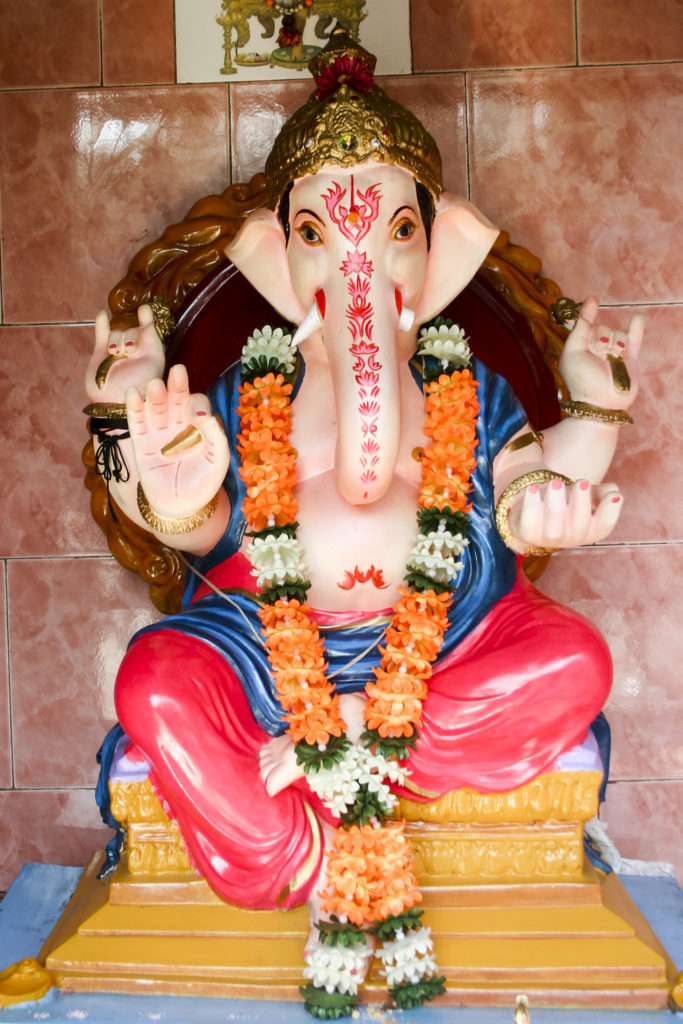
Ganesha, Lord of Obstacles and New Beginnings, Pune

Karma Yoga & Affirmations for the New Year


Karma is a theory of cause and effect — of the consequences of our actions.  All actions (including “inaction”) have results, however complex and unforeseen.  We are responsible for the actions.  We may not foresee all the consequences, and we cannot control the outcomes since we are not prescient about all the effects.  However, that must not keep us from “right effort” and “right action” (borrowing Buddhist terms).

In karma yoga one seeks to act without attachment to the consequences and without using actions to feed the ego.

All the affirmations below are linked in some way to being active in the world and, wherever possible, reducing suffering in and around us.  They are from many traditions, but the voices seem much the same.


Chants, Mantras & Prayers for the New Year


A universal mantra

Universal Prayer for Peace from the Upanishads

Ganesha Mantras

Invocation (Om Vakratunda Mayakaya …)

Shri Ganesh Vandana Mantra (Om Suklam Baradharam Vishnum…)

Ganesha Gyatri (Om Ekadanta ya Vidamahe …)

“Look to This Day” (Kalidasa, 3rd/4th century sanscrit poet))

Affirmations/aphorisms by Rabbis Hillel and Tarfon

Two prayers from the Christian tradition

Reinhold Neibuhr, the “serenity prayer”

The Prayer of Saint Francis (“…make me an instrument of Thy peace..”

Two Metta/Loving Kindness Meditations from the Buddhist Tradition

200_0089

Ancient Ganesha, Elephanta Island, Mumbai Harbor (Maharasthra)


A Universal Prayer/Mantra (yoga and Buddhist traditions)

Lokah, samastah

Sukhino bhavantu

 English: May all beings, everywhere, be happy and free.


Universal Prayer for Peace from the Upanishads

Om, Sarve bhavantu sukhina

Sarve Santu niramaya

Sarve Bhadrani

Pasyantu

Ma Kashchit du kha Bhagbhavet

Om Shanti Shanti Shanti

English:

May all be prosperous and happy

May all be free from illness

May all see what is spiritually uplifting

May no one suffer

Om Peace, peace, peace


THREE GANESHA MANTRAS

img_9117

Temple to Ganesha, Pune


Ganesha has many names and attributes.  A mantra to him is often used when beginning a trip, a new venture, or opening a public event, or even a new life phase.

For the New Year, the attributes we might particularly appreciate are Ganesha as the Lord of Obstacles (he can place them in the path, or remove them), and as the Lord of New Beginnings.  However, Ganesha has many other attributes.

Shakunthala Jagannathan Nandith Krishna [see Note on Ganesha below] lists 32 attributes including beloved child, god of devotees, valiant warrior, the powerful one, a god of achievement, protector of the weak, and giver of success (often pictured with the Goddess Lakshmi).

In Maharasthra there is a strong tradition of Ganesha worship, with the huge annual festival of Ganesh Chaturthi in the region of Pune.  This region also has many ancient and recent Ganesha shrines.


One famous invocation to Ganesha invokes him to remove obstacles (forever):

Om Vakratunda Mahakaya

Suryakoti Samaprabha

Nirvighnam Kurume Deva

Sarva Kaaryeshu Sarvada

Oh god with curved trunk, large body whose aura is like the light        

of a crore [= 10 million] of suns.  Please make my entire work obstacle free, forever.


There are often differences in the way the sanscrit is transliterated into English syllables.   As an example, the above mantras is rendered by Shakunthala Jagannathan Nanditha Krishna (see Notes below on bibliography and pronunciation) this way:

Vakratunda mahaakaaya

Sooryakoti samaprabhaa

Nirvighnam kurumedeva

Sarvakaaryeshu sarvadaa


For a literal translation, this may help: {Thanks to several websites for this glossary.]

Vakra -one that is not straight

Vakratunda – curved trunk

Mahakaya – large body, most powerful

Suryakoti – Surya is sun, koti means crore (10 million)

Samprabha – prabha is aura, or grandeur, sama – like

[the two lines together, Suryakoti samprabha, means the lord whose aura is like light of crores of sun put together)

Nirvignam – free of obstacles

Kurume – give me

Deva – god

Sarva – all

Karyeshu – work

Sarvada – always

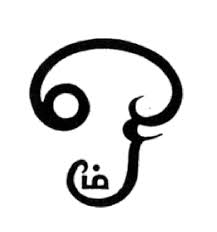
tamil-om

This Om from Tamil is, famously, also a symbol for Ganesha. In some traditions, Ganesha is a special object of worship and a focus for religious observance. Here Ganesha is identified with the sacred sound OM.


Shri Ganesh Vandana Mantra

Om Suklam Baradharam Vishnum
Shashi Varanam Chatur Bhujam
Prasanna Vadanam Dhyaye
Sarva Vighnopa Shantaye


Salutations to Ganesh who is omnipresent, who wears white robes
Whose face is as bright and cool as the moon and who has 4 arms
Who has a contented face (capable of blessing)
Meditating on him, all obstacles in my life are neutralized.


Suklam (white) Bara (dress)

Dharam (wearer)

Vishnum (all-pervasive)

Shashi (moonbeam, light of the moon)

Varanam (color)

Chatur (four)

Bhujam (arms)

Prasanna (smiling/contented)

Vadanam (face) Dhyaye (I meditate)

Sarva (all)

Vighnopa (obstacles)

Shantaye (neutralized, peaceful) 


Ganesha Gyatri

 This is one of the best-known mantras, the Ganesha Gayatri.  It has a classic form of 24 syllables, eight each in three lines.

Om Ekadanta ya Vidhamahe,

Vakratunda ya Dhimahi,

Tanno Danti Prachodayat


English

We pray to the one with the single elephant tusk who is omnipresent. We meditate upon and pray for greater intellect to the Lord with the curved, elephant-shaped trunk. We bow before the one with the single elephant tusk to illuminate our minds with wisdom.


Translation of the Ganesha Gyatri Mantra

Ekadantaya – Single (eka = tusk/tooth (danta) [See NOTE, on linguistic trivia]

Vidhamahe – who is omnipresent

Vakratundaya – Curved trunk

Dhimahi – We meditate upon and pray for greater intellect

Tanno Danti – We bow before the one with the single tusked elephant tooth

Prachodayat – Illuminate our minds with wisdom

img_9155

Shrine to Ganesha, Pune, India

[

This poem by Kalidasa, dating from roughly the 4th century, is well-known in Twelve-Step groups where it stands as a reminder to take life one day at a time, free from rerets about the past and anxieties an unknown future — living here and now, in the world as it is given and not as we would have it be.

Look to This Day (Kalidasa)

Look to this day:
For it is life, the very life of life.
In its brief course
Lie all the verities and realities of your existence.
The bliss of growth,
The glory of action,
The splendor of achievement
Are but experiences of time.

For yesterday is but a dream
And tomorrow is only a vision;
And today well-lived, makes
Yesterday a dream of happiness
And every tomorrow a vision of hope.
Look well therefore to this day;
Such is the salutation to the ever-new dawn!

Kalidasa (3rd/4th Century sanscrit poet)


Rabbis Hillel and Tarfon are almost universally known for these aphorisms, though not all know their names of even the time of their lives (roughly just before or after the Common Era).

They are a wonderful statement of karma yoga — the yoga of skillful action in the world.  They focus on what is to be done now, without obsessing about the results or being daunted by the difficulty of the task.  (Famously, even Ronald Reagan cited Rabbi Hillel, without mentioning him by name, during a policy speech.)

I often think of these two aphorisms together with “Lokah samastha sukhino bhavantu,” “May all beings everywhere be happy and free.”  If I believe that, then I must try to live that even though humility and reality tell me that my efforts are only a small part of the change in the world.  Hillel tells us to act now for ourselves and others, and Tarfon reminds us that we may not finish the task, but that it remains ours.  As the Fifth Remembrance also reminds us, my actions are my only true possessions.


Rabbi Hillel (…if not now, when?)

“If I am not for myself, then who will be for me? And if I am only for myself, then what am I? And if not now, when?”

and…

“Take care of yourself — you never know when the world will need you.”

Rabbi Hillel, ca 30 BCE-10 CE

Rabbi Tarfon (‘”….neither are you free to abandon it.”)

Do not be daunted by the enormity of the world’s grief. Do justly, now. Love mercy, now. Walk humbly, now. You are not obligated to complete the work, but neither are you free to abandon it.

Rabbi Tarfon (1st/2nd Century, CE)


PRAYERS FROM THE CHRISTIAN TRADITION


Reinhold Neibuhr’s famous prayer, in the short form used by Twelve-Step groups

God grant me the serenity to accept the things I cannot change,

Courage to change the things I can,

and the Wisdom to know the difference.

There are other, longer versions that probably represent the prayer in its original form.  In both short and long forms the prayer is also compatible with the (karma) yoga of action which focuses on what is to be done now, in this present day (see Kalidasa), within my powers.

God, give me grace to accept with serenity

the things that cannot be changed,

Courage to change the things

which should be changed,

and the Wisdom to distinguish

the one from the other.

Living one day at a time,

Enjoying one moment at a time,

Accepting hardship as a pathway to peace,

Taking, as Jesus did,

This sinful world as it is,

Not as I would have it,

Trusting that You will make all things right,

If I surrender to Your will,

So that I may be reasonably happy in this life,

And supremely happy with You forever in the next.

Amen.

This last prayer from the Christian tradition describes an aspiration to the way one would hope to be in the world, acting now.  Except for the reference to a supreme being, it resonates with the Buddhist commitment to reduce suffering in myself and in others.

The Prayer of Saint Francis (… make me an instrument of thy peace…”

Lord make me an instrument of Thy peace.

Where there hatred, let me sow love.

Where there is injury, pardon.

Where there is doubt, faith.

Where there is despair, hope.

Where there is darkness, light.

Where there is sadness, joy.

Lord, grant that I may not so much seek to be consoled as to console, to be understood as to understand; to be loved as to love; for it is in giving that we receive, and it is in pardoning that we are pardoned, and it is in dying that we are born to eternal life.

Two Metta Loving-Kindness Meditations from the Buddhist Tradition

Metta is the Pali word that is maitri in Sanscrit and usually translated as “loving kindness.”  Here are two examples that seem complementary with the aspiration in the Prayer of Saint Francis,

Metta

May my mind b filled with thoughts of loving kindness, compassion and joy.  May I be generous.  May I be gentle.  May I be at ease in body and mind.  May I be healthy and may I use my strength to offer the loving Presence of this path I walk.

May my heart become soft.  May my words by pleasing to others.  May my actions be kind.  May all my experinces help me to cultivate thoughts of generosity and gentleness.  May they inspire friendly behavior.  May they help me be free from fear, tension, anxiety, worry and restlessness.

May it be so for all beings

Loving Kindness Meditation

This is what should be accomplished by the one who is wise,

Who seeks the good, and has obtained peace.

Let one be strenuous, upright, and sincere,

without pride, easily contented, and joyous.

Let one not be submerged by the things  of the world.

Let one not take upon oneself the burden of riches.

Let one’s senses be controlled.

Let one be wise but not puffed up and

Let one not desire great possessions even for one’s family.

Let one do nothing that is mean or that the wise would reprove.

May all beings be happy.

May they be joyous and live in safety.

All living beings, whether weak or strong,

In high or middle or low  realms of existence,

Small or great, visible or invisible,

Near of far, born or to be born,

May all beings be happy.

Let no one deceive another nor despise any being in any state.

Let non by anger or hatred wish harm to another.

Even as a mother at the risk of her life

Watches over and protects her only child,

So with a boundless mind should one cherish all living beings.

Suffusing love over the entire world,

Above, below, and all around, without limit,

So let one cultivate an infinite good will toward the whole world.

Standing or walking, sitting or lying down,

During all one’s waking hours,

Let one practice the way with gratitude.

Not holding to fixed views,

Endowed with insight,

Freed from sense appetites,

One who achieves the way

Will be freed from the duality of birth and death.

NOTE: Ganesha

The iconic figure of Ganesha is a short, round figure that might that of a young person, topped by the head of an elephant.  Often, the head had only one tusk.

One popular  legend (in many versions) is that Ganesha was the son of the Shiva, the Lord of Yoga (and destruction).  Shiva returned from a long period in the forest and his way to his wife, Parvati, was blocked by Ganesha who did not recognize his father and was trying to protect his mother. Shiva also did not recognize his son and in anger struck off his head.  Later, in remorse, Shiva attempted to find another head for the boy and found one of a small elephant.

The single tusk (eka = one; danta = tusk or tooth) was, in one legend, lost in a  battle with a demon.  A famous drawing shows Ganesha using the tusk as a pen to transcribe the Bhagavad Gita from the dictation of sage Vyasa.

These legends are only two of many, and although they are widely known, they are only a superficial view of the importance of Ganesha.  He is often a powerful warrior (Vakratunda), a consort of goddesses, a warrior against demons, and much more.  For a much more richer and balanced view, see Shakunthala Jagannathan Nandith Krishna, GANESHA: The Auspicious…The Beginning. Bombay: Vakila, Fether & Simons, Ltd, 1992. I have the two legends the origin of Ganesha’s head, and the single tusk, from his book.  The book explains many other legends, beliefs and spiritual observances.


NOTE: Linguistic Trivia

Etymologically, danta, or tooth, seems to be the linguistic ancestor of “dentes,” dental, and other  modern words referring to teeth.  Similarly pada is related to “ped,” “podiatrist,” “pied a terre,” and other modern words related somehow to “feet.”   For comparison, there are other examples such as the word “sutra” which is related to “suture” or thread.  Thus, the sutras are like “pearls strung on a thread” of dharma.  Lilkewise, supta is ancestrally relted to “supine”  and we find that the “supta” asanas are generally done on the back, or in a supine position.


NOTE: Differences in Pronunciation and Transliteration

Depending on the sources consulted, there are often differences in translation and melodic accompaniment to the chants/mantras.  These are not necessarily important, but some forms are a bit easier to wrap the English-speaking tongue around.  Fortunately, the internet contains many example of chanted/sung mantras; however, these too show many variations in intonation and musicality.  Technically, though, the syllables are sacred and proper pronunciation is important for the physical and spiritual effect of the mantra.


The Kleshas/Afflictions Sutras II.3-II.5 “Spiritual Ignorance”

Kleshas/Afflictions

The kleshas are at the center of the definition and goal of yoga.

A disclaimer:

This part of the sutras is often a bit technical, compactly presented.  It sometimes seems a bit boring, preachy, and judgemental. Yet it is at the heart of the practice of yoga as defined by Patanjali.

At stake is nothing less than learning to see the world accurately and to act skilfully on that knowledge.

Yet, for many of us our confrontation with the sutras creates a dharma headache.  We know it is important but often what we understand seems obvious and much seems dense and technical — or perhaps hopelessly archaic.  The sutras were meant to be the “thread” of the philosophy — a thread that was to be followed with a teacher and not decipherable through simple reading and reflection.  We have many commentaries that help, but many of the most ancient ones seem dense as well.  Perhaps they draw on a cultural context that is far from our present-day understanding.  Desachar, the brother-in-law of BKS Iyengar and the son of Krishmacharya, the guru for both of them, once said that his father taught him the sutras twice in his lifetime.  Each time was different, and each took weeks to months of study and teaching.  Against this background, our own reading of the sutras is bound to be oversimplified, but it may get us started on getting rid of the dharma headache.

So… what we are trying to do here is to take an initial glimpse of the basic elements of the sutras.  These comments are by their nature very selective and superficial, but may serve as a beginning.

Chapters I (Samadhi Pada) and II (Sadhana Pada) start in a similar place.  They state the goal of yoga, though in somewhat different languge.

This parallelism has caused some commentators to suggest that each of the first two chapters has a similar purpose, but that they are directed at students of different development.

To review, the Samadhi Pada states the following as the goal or outcome of yoga:

I.2 yogah cittavrtti nirodhah

Yoga stills the fluctuations of the mind.

This the famous promise that yoga will attenuate the fluctuations of consciousness and lead to clarity and mental stability.

Sadhana Pada begins siimilarly with

II.2 The practice of yoga reduces afflictions and leads to samadhi.

Sutra 1.2 states the goal as eliminating fluctuations of consciousness.  Sutra II.2 states a primary cause of those fluctuations and begins to define the goal of practice.

II.2 contains the promise of yoga practice for those who are not of a temperament to follow the meditative path of Samadhi Pada ourlined in the first chapter.  It begins the delineation of “yoga for the rest of us.”

If you ask a group of yoga practitioners why they come to yoga class, how many spontaneously say they are there to “stabilize their consciousness?.”  Many more seasoned students may feel this, but at the beginning the language used by students is often to “reduce stress,” “find some mental peace,” heal a physical or mental ailment, or sometimes simply for exercise.  All of these personal goals are in keeping with the larger of yoga, since all can have the result of reducing the afflictions and finding equilibrium.  With with increasing practice, most students begin to see the deeper level of the practice which is expressed in terms of consciousness and its disturbances.  Sutra II.3 begins this reflection at the very beginning of the discussion of sadhana (practice) but expressed it in a subtler and more reflective way that incorporates concentration, equanimity, freedom from attachment, and “equilibrium of consciousness” (Mr. Iyengar’s term, in his commentary on sutra II.3).

BKS Iyengar here links yoga with meditation:  Yoga and meditation: “The purpose of this [kriya] yoga is to minimize all impediments to meditation and thus bring the intelligence to full, vibrant life.” (BKS, Light on the Yoga Sutras, p. 105)

The passage is a rare one in Mr. Iyengar’s commentaries because he often states  elsewhere that meditation cannot be taught.  Indeed, practice taught in his tradition often does not include an explicit component of sitting meditation, but here we can take the term “meditation” to be closely related to the goals of samadhi, attenuation of the kleshas, and mental equilibrium.  Here Mr. Iyengar affirms its importance as a goal of yoga even though his teaching gives priority to asana and pranayama.

In the logical exposition of the sutras, this early statement of the purpose of yoga is immediately followed by the barriers to that purpose — enumeration of the afflictions to be overcome. [Note: there are many other obstacles to be overcome as outlined in later sutras, but the afflictions have priority of place in the exposition of practice.]

II.3   avidya asmita raga dwesa abhinivesa klesah

The five afflictions which disturb the equilibrium of consciousness are: ignorance or lack of wisdom, ego, pride of the ego of the sense of ‘I,’ attachment to pleasures, aversion to pain, fear of death and clinging to life. (BKS translation).

This enumeration of the afflictions comes in the third sutra of the chapter and defines the mental, emotional, and spiritual challenge of realizing success on the path of practice. The first of these is avidya, spiritual ignorance.

Avidya (non-wisdom, or ignorance) is the primary source from which all the other afflictions are nourished.  It is ”the breeding ground of all affliction …” (BKS, p. 107)

But what is avidya/ignorance?  Sutra II.5 gives its main characteristics:

Sutra II.5 Mistaking the transient for the permanent, the impure for the pure, pain for pleasure, and that which is not the self for the self: all this is called lack of spiritual knowledge, avidya.

Each one of these elements of spiritual ignorance is worth examining in detail.  They are at the heart of all other kleshas — overcoming them is the central task of a fully-realized yoga practice.

Once again, ignorance lies in mistaking

The transient for the permanent

The impure for the pure

The painful for the pleasurable

The non-self for the Self

The Buddhist tradition has a special meditation for recognizing impermanence and learning to live with it.  It is called The Five Remembrances.  It is a reminder that what we have is transient, so that to recognize and embrace this impermanence is to live the present moment more authentically and deeply.  It reminds us also that we will lose all that we have, but our actions are truly ours.  How we act is more important than what we have and our actions are all that we truly “own.” [See note on karma below]

The Five Remembrances (From Thich Nhat Hanh)

I am of the nature to grow old.
There is no way to escape growing old.

I am of the nature to have ill health.
There is no way to escape ill health.

I am of the nature to die.
There is no way to escape death.

All that is dear to me and everyone I love
are the nature to change.

There is no way to escape
being separated from them.

My actions are my only true belongings.
I cannot escape the consequences of my actions.

My actions are the ground upon which I stand.

We can begin to understand impermanence, but what about the Self?.  In classical yoga thought this Self is the true “you” and should not be confused with any of the material or mental things we often think of as part of  “us.”  This “cognitive error” is at once difficult and easy to understand.  It is harder because the “self” must be understood as not the body, and not the mind.  It is a deeper “soul” or essence.  This is easier to understand when we recognize that one’s mundane self is not defined by material objects or possessions. It is next to impossible for rational Westerners to see the mind as just a mind, and thoughts as just thoughts — we tend to identify with our thoughts as an essential part of ourselves.  Indeed, we often think our thoughts are the self.

The warning about mistaking material objects as a definition of the self are well known.  If I define my success or meaning in life by my possessions or mundane success, I am in danger of identifying those transient objects as “me,” the real essence of “me,” in yoga yoga theory is a deeper Self.  This does not mean the “small self” of the ego, but the transcendental “larger Self.” The errors of avidya cloud that Self by making it “selfish” in the mundane sense — where it grasps at possessions (raga), fears and hates those things that might cause their loss (dwesha), and warps our perceptions of the world.  To transcend them is to be able to see, in the words of one writer, to achieve “vision unveiled by longing.”

Perhaps this warning again against materialism and attachment seems especially directly at people in modern society, but this warning was articulated by Patanjali some twenty centuries ago and reflects a spiritual tradition much older.  Now, warnings come in a variety of modern ways — as in the bumper-stickers that say: “Don’t believe everything you think,” and “Are you sure?”  In their own cryptic way they point to the vanity and error in taking your thoughts too seriously.  After all, they are only thoughts and that is what minds do — think.  Just as external material objects are not our “Self,” our thoughts are also impermanent and, in many ways, illusory.  There is perhaps nothing as fleeting as a thought, nor as blinding as a stubborn thought that is resistant to clear vision.  Both in their impermanence, and in the illusion of permanence, thoughts are also “non-self.”

In the discussion of the pure and the impure, and pleasure and pain, one classic yoga view warns again pleasures of the body and senses,  What seems pleasurable eventually creates longing and attachment (raga), and fear of loss (a form of dwesha).  Both can nourish a “small self” afflicted by greed, desire, and fear.

Some older commentaries, and corresponding reflections in Buddhism, focus on details of the body’s ailments, impurities, and eventual decay.  They counsel a practice that transcend the afflictions and ultimate decay of the body. This is the way of renunciation and “practicing austerities.”

That austere path may be the way to becoming a fully enlightened yogi in the classic sense, but who wants to take it?  And why must rejection of the body be a part of spiritual growth?

One answer is the path of hatha yoga. Its development might be seen, at least in part,  as a rejection of monastic austerity and body-hatred.  It is an alternative path that sees a healthy body as an object of practice and a path to higher level of spiritual attainment.  It is here that physical practice (asana) and pranayama have their place in the contemporary practice of yoga.  Most of us do not come to yoga practice to disparage and reject the body, but to heal it and give it new life and stability through practice.  A simple tenet of hatha yoga is to use the healthy, trained body as a path to higher spiritual development.

That is why most of us choose the path of “practice” in yoga and use also the path of body in our sadhana (practice).  What Mr. Iyengar has given us is a deep and elaborate practice of asana and pranayama (see his Light on Yoga, and Light on Pranayama).  These two limbs of yoga receive fewer than a dozen sutras in Patanjali, but they form the foundation of our modern practice.

We build on the philosophical foundations of the sutras, but our physical practice is based on a more positive view of the body and its importance in our development. A familiar cliche is that “my body is a temple,” but this is a more satisfying view that the ancient view of the body as a bundle of afflictions, ailments, and decay.  The body is all that, of course, but the assumption that the body is a “temple” and the “path” is a more satisfying premise for our daily practice (even though we know, as in The Five Remembrances, that the other side is always present).

Hatha yoga is one path, but the classic path of the renunciate is still practiced, and the bhakti tradition emphasizes devotion over physical practice.  Thus, when people say they are “doing yoga,” they may be referring to some form of hatha yoga in a studio, but this is only one a many types of yoga that have appeared in its long history.

Returning to the sutras, II.4 suggests there is some hope — ignorance varies in its power and presence.

II.4 Ignorance is the breeding ground of the other klesas, whether they are in a dormant, weak, intermittent, or fully activated state (Bryant translation)

It is the foundation of of all the other klesas, the field, ksetra, within which they grow (Bryant, 177)

The next klesha, asmita or ego, stems from ignorance and is the sense of I/me/mine that masks the “greater Self” with the “smaller self” of the individual ego.  Buddhism does not speak of a self in this sense, but it similarly emphasizes the danger of falsely identifying impermanent objects and thoughts as a “self” and artificially seeing that self as separate from others.

The differences between yoga and Buddhism on the question of the self are considerable and irreconcilable, but they agree that attachment is a serious affliction and impediment to spiritual development.

II.5 Ignorance is the notion that takes the self, which is joyful, pure, and eternal, to be the nonself, which is painful, unclean, and temporary. (Bryant trans.)

Swami Veda refers to this as “erroneous cognition.”  This is inaccurately perceiving reality and in all the errors of misunderstanding that follow: “It is through avidya that one gives a certain false shape to reality, inviting it to become a real substance.”  (Swami Veda, 52).  Through ignorance we create a reality that is certainly partial and biased. Our “false shape” of reality diverges from that of others — creating possible discord and aggression, and veiling the deeper reality of the self and the world.

Here again is another persistent theme in yoga and other Eastern philosophy: There is deep doubt about our raw, untrained ability to accurately perceive reality and to choose wisely among its alternatives.  Our perceptions are warped by our labels and preconceptions and desires.  In turn, our cognitions/beliefs and the resulting emotions are based on a false or partial reality.  The process is circular because our beliefs and desires affect our future perceptions and make a true vision (“unclouded by desire”) quite difficult to attain.

The rather dour assessment in II.5 is softened a bit by the preceding sutra which notes that kleshas are not always present in full strength.  As the early sutras promise, they are attenuated by the practice of yoga.  And…we don’t have to wait for the entire, arduous path to make progress.  There is a simple approach that is accessible immediately in the technique of “cultivating their opposites.

This is worth more discussion, but it is encouraging that two millennia of commentary advise us that shame, guilt and self-punishment are not the most effective means for overcoming the afflictions.  We need the positive step of consistently cultivating their opposites in our thoughts, action and behavior.  Here, “discriminative judgement” means being able to discern what is transient, impure, pleasant, and of the deeper “self.”


Note on karma

The fifth remembrance states that

My actions are my only true belongings.
I cannot escape the consequences of my actions.

My actions are the ground upon which I stand.

This is a central statement on karma.  The term “karma” is often used casually, but here it has a specific meaning. My actions are my only true belongings because in both yoga and Buddhism my actions have consequences that stay with me throughout my lifetime.  In face, those consequences stay with me through many lifetimes.  Karma is linked to the belief that the cycle of incarnation on earth is the result of consequences of part actions and that these actions determine future rebirths.  There is more to this, of course, but the deeper meaning of the “Remembrance” above is that my actions stay with me and have consequences (even as everything else in me and around me changes and disappears).

Karma is more meaningful if one connects it to the notion of reincarnation, but it works in the more limited range of our current earthly lives.  My actions have consequences, and they are “mine” regardless of my denials and carelessness.  The balance of consequences of what I do in this life is my responsibility.


The Niyamas: Personal practice and discipline

The Niyamas are first given in Sutra II.32 and elaborated in Sutras II.40-45. They do not describe what is to be done (as do the yamas), but rather how it is to be done by the yoga practitioner.

Mr. Iyengar’s translation of sutra II.32 is:

“Cleanliness, contentment, religious zeal, self-study and surrender of the self to the supreme Self or God are the niyamas.”

Bryant renders II.32 similarly as:

“The observances are cleanliness, contentment, austerity, study… and devotion to God.”

In other words, the guides for personal practice are:

saucha (cleanliness)

santosha (contentment)

tapas (determination/zeal/austerity)

svadyaya (study of self and scriptures/teachings)

ishvara pranidhana (devotion to the supreme soul or God)

The niyamas describe the qualities of practice to which practitioners should aspire.  This begins to answer the reaction of the practitioner to the high standards of the yamas and the immediate question: “How can I possibly do all that?”  The niyamas do not prescribe morality, but rather describe the attitudes an behavior that help along the path.

Their importance is clear when we look at the first two sutras in Sadhana Pada (Bryant translation):

II.1 Kriya-yoga, the path of action, consists of self-discipline, study, and dedication to the Lord.

The path of  meditation is laid out in Chapter I, Samadhi Pada, but Chapter II lays out the path of action which Patanjali calls “kriya-yoga.”  Its key elements are the last three of the niyamas — tapas (zeal/determination/self-discipline), svadyaya (study), and ishvara pranidhana (dedication to the Lord).  In other words, the entire practice of the yoga of action is vitally supported by the last three niyamas.

What is kriya yoga, and why practice it?

Simply enough kriya yoga is Patanjali’s term for the yoga of action.  It can be contrasted with the yoga of meditation and study (jnana yoga) or of devotion (bhakti yoga).  It encompasses physical postures and breath work, and in the older practices may include various complex cleansing practices.

Many such practices might be considered “extreme” to Western practitioners, but in the broadest sense they might be considered part of kriya.  For most of us, kriya means the active steps for achieving clarity and enlightenment.  Chapter II of the sutras is devoted to this path, but the goal is the same as in Chapter I — it is samadhi which is achieved through the weakening or attenuation of the afflictions (kleshas).

II.2 “[The yoga of action] is for bringing about samadhi and for weakening the afflictions…”

The goal of practice is thus the same as that described for advanced spiritual yogis in Chapter I — to achieve the highest stage of concentration, absorption, and clarity known in yoga as samadhi.  Nowhere does it say that the goal of yoga is longer hamstrings or flexibility of the body — those are physical elements along the path that support the higher goal of mental clarity, concentration and spiritual peace.

The ensuing twenty-five or so sutras detail the afflictions (kleshas) and the path to eliminating them and their influence on the fluctuations of the mind.  Only then do we reach the moral steps of yama.  Thus, the steps of morality and personal behavior are inextricably intertwined in the definition of the practice path.

Saucha (cleanliness, purity) refers to both external and internal physical practices, and to internal spiritual practices.There are many unusual cleansing practices in the old hatha yoga texts for cleansing the body.  Many have lapsed or are rarely practiced in the West.

Cleanliness remains an important practice, and includes not only external physical cleanliness but also internal physical cleanliness related to nutrition and medicine.  A vegetarian diet is often included in this category, as is the traditional Indian form of Ayurvedic medicine which contains a variety of practices, remedies and treatments designed to promote internal physical cleanliness.  These physical practices provide a basis for cleansing the mind and spirit.

On internal spiritual practice, “saucha is purification of one’s sentiments and emotions.” (Swami Rama, p. 494).

Mr. Iyengar (p. 144-145) describes cleanliness as a “spiritual exercise”, even though some of Patanjali’s sutras express a hostility to the physical body:

II.40. By cleanliness, one [develops] distaste for one’s body and the cessation of contact with others.(Bryant translation)

This negative view of the body is echoed in many religious traditions, but it is not unchallenged within the broader diversity of yoga.  Hatha yoga sees the healthy, trained body as an essential factor in reaching higher levels of spiritual development.  The Iyengar tradition is within this broader, body-positive orientation that gives priority to physical practice.

Without expressing direct opposition to Patanjali on this point, Mr. Iyengar expresses a quite different belief that gives importance to the care the body:

…the sadhaka does not regard [the body] with disgust or distaste, but keeps it clean and pure out of respect for the dweller, purusa, within.  To that extent [the practitioner] respects the body as a temple.

For Mr. Iyengar essential elements of cleanliness are asana and pranayama which “cleanse the body physically, physiologically and intellectually.”

There are varieties of yoga that see the body as a barrier to enlightenment, but hatha yoga views the body as a vehicle for practice and evolution to higher spiritual levels.

Sutra II.41 elaborates the connection between cleanliness and purity/clarity of thought:

II.41 When the body is cleansed, the mind purified and the senses controlled, joyful awareness needed to realize  the inner self, also comes. (BKS Iyengra translation). 

Bryant gives a more literal translation as:

II.41. “Upon the purification of the mind, [one attain] cheerfulness, one-pointedness, sense control, and fitness to perceive the self.”

In either translation, internal purification of the mind is the path to deeper spiritual growth.

Santosha is translated as contentment.

In Sutra II.42 : “From contentment, the highest happiness if attained.” (Bryant).

But does santosha mean being complacent and foreign to the mundane world?

Complacency and detachment may be one version of the monastic path.  However, for most of us it cannot mean being oblivious or detached from the world, or being unaware of injustice or mundane matters. It may seem that monastics and sannyasi sometimes have gained contentment at the cost of withdrawing from meaningful engagement with the world.  However, the sutras of Patanjali, and socially- engaged aspects of Buddhism recognize the importance of living in the world.  In the Five Mindfulness Trainings of Thich Nhat Hanh, the passage on “True Happiness” (another translation of santosha) is that

I am aware that happiness depends on my mental attitude and not on external conditions, and that I can live happily in the present moment simply by remembering that I already have more than enough conditions to be happy.

In the yoga sutra commentaries this is sometimes given in the simple sentiment that “this is enough.”

“Contentment means being satisfied.. the absence of the desire to grasp.”

And  quoting a classic commentary:

When a person always says “enough” to whatever [is gained], that resolute adherence, marked by happiness (sukha) the sages call contentment.

However this sounds like a conflict between worldly yoga (e.g., karma yoga),  and “engaged Buddhism” on the one side, and the full realization of the yogi in Patanjali’s sutras.  I think there is no way to negotiate around this conflict for people who are engaged in the mundane world and have the tasks of living in a family, making a living, and fighting for their values in the broader society.  In yoga terms this may be the engagement of the householder, whose tasks gradually give way to spiritual life and withdrawal.  In “engaged Buddhism” there is no such life-phase distinction and the path is to be active in the world even while drawing spiritual nourishment from the dharma.

Tapas

II.43 states that

Self-discipline (tapas) burns away impurities and kindles the sparks of divinity. (BKS Iyengar)

Bryant’s translation if II.43:

From austerity, on account of the removal of impurities, the perfection of the senses and body manifests.

Mr. Iyengar speaks of “burning zeal and austerity, a sort of unflagging hardness of attitude towards oneself…”  (p. 147).

In the older yoga commentaries tapas is often taken to mean “austerities,” as in the chilling phrase “practicing austerities.”  This usually refers to extreme exertions and practices.  In Iyengar yoga, and for most modern practitioners, a more attainable definition is the zeal and determination required to make progress along the path.  A milder, but still demanding notion of “austerity” implies sacrifice and dedication to improvement.

Svadyaya

The term seems literally to mean “self-study” in the sense of self-awareness, but its older meanings included study of scriptures and japa (the repetition of mantra or the sound of OM).  Bryant connects this with ishvara pranidhana. and  allies the concept more with scriptural study than with the more modern meaning of self-study and understanding in the course of one’s yoga practice.  A modern, but still rigorous, is to tapas as constant, unstinting practice of yoga.

Mr. Iyengar acknowledges the older meaning of svadyaya criptural studh when he says

Traditionally, svadhyaya has been explained as the study of he sacred scriptures and the recitation of mantra, preceded by the syllable AUM, through which the sadhaka [practitioner] gains a vision of his tutelary or chosen deity, who fulfils all his desires (p. 148).

Nevertheless, the most common meaning in the Iyengar approach, and perhaps in the broader hatha yoga tradition, is zeal and determination in sadhana, the yoga of practice and action.

Ishvara Pranidhana

Note: For this, see the earlier posts on the role of God or a Supreme Being in Patanjali’s sutras.

The Yamas (2): The Primacy of Non-Violence (ahimsa) in the “Universal Vows”


Priorities in the Limbs of Yoga and in the Yamas

The full exposition of the path in Chapter II, Sadhana Pada, can be daunting at first glance.  It may evoke unrealistic expectations and frustrations that occur when one begins the path and sees how far away the goal is of “self-realization”  or “enlightenment.”

Realistically, though, we don’t set standards of that sort with our other activities.  Granted, many are perfectionists and that can get in the way, but a runner does not expect to beat the four-mile in the first training.  The joy of the path is knowing that it is long, but methodical, and has been taken by many before us.  It is also accessible (if not absolutely attainable) for most of us.  Sadhana Pada is the path for “the rest of us” for whom the high standards of Chapter I, Samadhi Pada, do not (currently) fit our temperament,our training, or the stage of life in which we find ourselves.  It is worth remembering that our toga teachers may have high standards, but that they do not expect people to walk onto the mat for the first time and slip into Ekapada raj kapotosana (the king pigeon pose), or, for that matter, do a Yoga-Journal-cover version of Trikonasana.

The same is true for the limbs of the classical (raja) yoga of Patanjali.

Priorities along the path

As many of have experienced his teaching, B.K.S Iyengar has given precedence to asana, the practice of postures, and to pranayama, breath control.  He follows the classic logic of the yoga sutras here, where only the most advanced students begin with morality, discipline and meditation.  For the rest of us — practitioners described in the sutras variously as “dull” or scattered or ignorant, the path is through sadhana (practice).

The chapter on practice, Sadhana Pada, lays out this path for those of us who are not “naturally” yoga adepts and who struggle to integrate principles of yoga with our practical lives in the world. Swami Veda quote the classic Vyasa commentary in which he says:

One who has conquered the higher ground by the grace of God need apply himslef in the lower grounds. (p. 483)

Thus, Swami Veda elaborates. “the sequence of angas (limbs) is requisite only in the case of the dullest [practitioners]”  (p. 483).  the path in Sadhana Prada is, in other words, for the rest of us.

The yamas and niyamas are not prerequisites for beginning a practice — they are probable benefits of the path of practice.  We are not required to reach the high standards of the yoga path immediately, but to work toward it through our practice.

Nevertheless, the moral commandments (yamas) are named early in the sutras of Patanjali, and it is useful to take a closer look at them.  They are classically described as the beginning of the “exterior” limbs of yoga, leading to the interior path to the deeper spirit of the practitioner.

The “exterior” and “exterior” limbs of yoga

The division of the limbs into the exterior and the interior yamas describes the progressive “involution” of the practice from the outer sheaths of the body to the deeper levels of mind and spirit– from the body toward the spiritual center and mental clarity.

The yamas are guides/commandments for individual moral and social behavior and begin the exterior accomplishment of yoga

The three exterior limbs of yoga (bahir-angas): yamas (moral commandments) and  niyiamas [personal practices and discipline], and asana (postures).

Mr. Iyengar speaks of a middle or transitional category that contains the limbs of pranayama (breath control) and pratyahara (stilling the senses) which provide the transition from the outer practice to the inner practice.

The interior limbs of yoga (antar-angas) progress from concentration to  meditation to spiritual absorption.  They are dharana(single-pointed concentration), dhyana (meditation), and samadi {the deepest “meditation” limbs of practice).

The yamas, the universal moral commandments for yogis are given as:

ahimsa (non-violence)

satya (truthfulness)

asteya (non-stealing)

bramacharya (celibacy, sexual responsibility)

aparigraha (non-coveting)

In the classical literature to be a “yogi” means to be a perfectly accomplished, self-realized person following the path.  Others at a move basic stage of realization might be considered practitioners or aspirants.  This traditional distinction makes many practitioners reluctant to call themselves “yogis” because to do so would be a prideful inaccuracy for most of us. In the old saying,”If you say you are a yogi, you probably are not.”

In the sutras, the niyamas are listed before the actual exposition of the yamas.  They describe the quality of personal behavior and attitude of the practitioner, and give a sense of what is to be expected of the developing practitioner.  We simply list them here in the order they are presented, and then return to a discussion of the yamas.  This follows the exposition of Patanjali who lists the yamas, then the niyamas, then returns to a commentary of each in turn.

The Niyamas, personal practices and discipline are:

saucha (cleanliness, exterior and interior)

santosha (contentment, acceptance that whatever you have is “enough”)

tapas (determination/zeal)

svadyaya (study of self and scriptures/teachings)

ishvara pranidhana (devotion to the supreme soul, simetime referred to as the Supreme Guru, however one understands that)

The niyamas describe the qualities of practice to which practitioners should aspire.  This begins to answer the reaction of the practitioner to the high standards of the yamas and the immediate question: “How can I possibly do all that?”  The niyamas do not prescribe morality, but rather the way one pursues the path.  This is discussed in more detail in a separate post. For now we return to the question practitioners often confront in balancing conflicts between the yamas.

An important question is the classical conundrum of how to be both truthful and non-violent.  The study of ethics thrives on this very human negotiation of competing values.

The conflict seems easier to resolve if we see violence only as external action, but that is too simple an interpretation.  The sutra commentaries are more broader and rigorous in defining himsa.  Violence includes not just behavior and violent action, but also thought and speech.  This more demanding definition of violence raises the conflict between truthfulness and violence more pointedly:

There are often situations in which telling the “truth” is painful and in which telling a lie appears to avoid harm.  In short, what to do if there is a conflict between ahimsa (non-violence) and satya (truthfulness)?

The Code of Manu gives a classic example that is often repeated in the sutra commentaries (this citation from Swami Veda Bharati):

One should speak truth, speak pleasant,

not speak unpleasant truth;

Nor should ones speak pleasant untruth,

this is the perennial law (dharma)

This is often expressed in the “tests” one should consider before speaking

Is it true? (How do I know? Am I sure?)

Is it fair? (Does it do harm or injustice, or cause suffering?)

Is it necessary? (Must this be said now and to this person?  What impact does my speech have on increasing or decreasing the suffering of others?

The question of “what is true,” and “how do I know it” refers to different ways of knowing,  Patanjali specifies three ways:  direct perception, inference and logic, and acceptance of authority and teachings.  Much of the morality of the conflict revolves on what is “true,” and from whose perspective?  How to I know it, with all the fallibility of knowledge?  What certainty of “truth” do I need in order to risk increasing suffering for myself and others?

Each of these modes of knowing is subject to distortions and must be examined carefully.  For example, a principle from Buddhism is “However I may perceive things, they are never so.”  That means that I can never be absolutely correct because of distortions in my perceptions.  They are always altered by my desires, preconceptions and fears.  So I must examine my perceptions carefully.  The same is true of “inference and logic,” and the “acceptance of authority and teachings.”  Each may be misleading, especially when logic is based on faulty perceptions or authority is chosen unwisely.

A modern Buddhist approach is in the following passages from the Five Mindfulness Trainings of the tradition of Thich Nhat Hanh.  These modern passages are not exactly equivalent to the sutras, but they draw on the correspondence between the yamas in yoga and the Buddhist precepts of non-violence in thought, speech and action (the corresponding yama is given in brackets):

Reverence For Life [non-violence/ahimsa]

… I am committed to cultivating ..insight …and compassion and learning ways to protect the lives of people, animals, plants, and minerals. I am determined not to kill, not to let others kill, and not to support any act of killing in the world, in my thinking, or in my way of life. Seeing that harmful actions arise from anger, fear, greed, and intolerance, which in turn come from dualistic and discriminative thinking, I will cultivate openness, non-discrimination, and non-attachment to views in order to transform violence, fanaticism, and dogmatism in myself and in the world.

Loving Speech and Deep Listening [non-violence in thought and speech]

Aware of the suffering caused by unmindful speech and the inability to listen to others, I am committed to cultivating loving speech and compassionate listening in order to relieve suffering and to promote reconciliation and peace in myself and among other people, ethnic and religious groups, and nations. Knowing that words can create happiness or suffering, I am committed to speaking truthfully using words that inspire confidence, joy, and hope. When anger is manifesting in me, I am determined not to speak. I will practice mindful breathing and walking in order to recognize and to look deeply into my anger. I know that the roots of anger can be found in my wrong perceptions and lack of understanding of the suffering in myself and in the other person. I will speak and listen in a way that can help myself and the other person to transform suffering and see the way out of difficult situations. I am determined not to spread news that I do not know to be certain and not to utter words that can cause division or discord. I will practice Right Diligence to nourish my capacity for understanding, love, joy, and inclusiveness, and gradually transform anger, violence, and fear that lie deep in my consciousness.

This modern statement of non-violence places special emphasis on verbal violence and on the question of my perceptions — how do I know I am correct.  Here the classic buddhist notion is repeated that a major source of conflict and suffering lies in my own perceptions.

Thus, the emphasis on perceptions points back to the question of “is it true.”  This places great responsibility on the discriminative intelligence of the practitioner.  But how do these caveats and injunctions apply in the vast flux of information in gossip, mass media, and the internet?  Having more “information” obviously does not absolve us of examining “is it true” and “how do I know.”

The second and third questions : “Is it fair?” and “Is it necessary?” remind us that something may be true, but saying it may be neither fair or necessary.  As in the laws of Manu, One should be wary of speaking unpleasant truths if they are neither fair nor necessary, and try to avoid speaking “pleasant untruths.”

In the possible conflict  between ahimsa (violence) and satya (truthfulness), the deciding criterion is whether what I say causes.

Ahimsa-non-violence” of thought, speech, and action

An old dictum of buddhism and yoga is that “you are what you think.”  Thoughts precede speech and action and they are not harmless.  Each can be a form of violence, or no-violence.

Violence (himsa) can have many qualities ranging from severe to mild, lasting to impermanent, but ahimsa is a broad concept that does not include just physical aggression and violence.

Simply restated: Ahimsa means non-violence in thought, speech and action.

Intention is important also.  In a classic examples from the commentaries, a surgeon may cause suffering, but it is done to alleviate a greater suffering and to restore health.  In another classic sutra commentary, there is an imaginary story about a thief asking which way the victim has fled.  Should one be truthful (satya) when it will lead to violence.  This classic answer is that ahimsa is more important than satya when “truthfulness” may lead to suffering and injustice of the possible victim.

A last note: There is something unsettling about an absolute moral code and a set of high personal standards that nevertheless do not provide an infallible guide to behavior.  Some early religious traditions have attempted to provide a book of “casuistry” that covers all obligations and eventualities. The Code/Laws of Manu performed this function, but the impulse is well-known in other traditions as well. In yoga the yamas and niyamas do provide guides for the practitioner, but must be realized through “discriminative intelligence” of the practitioner (sutra II.28).  There are some priorities of moral behavior, but the choice and responsibility remain with the individual.  In this tradition, the choices become “purer” as one progresses along the yogic path.

Note on “Discriminative Intelligence”

Sometimes there is a confusion between the technical meaning of “discrimination” in the yoga sutras and the more common modern use of the term to mean prejudicial thought, action or behavior.  In yoga “discrimination” or discriminative intelligence generally means the mental ability to distinguish and make appropriate choices between such dualities as  the pure and the impure, that which is pleasurable and that which brings pain, between the permanent and the impermanent, and (most important) between the Self and the non-Self.  [Note: these are defined more precisely in the sutras on the kleshas, or afflictions].  In this classic usage “discimination” means the development of the critical capacity of the mind through yoga.

The more common modern use of “discrimination” means negative labeling and stereotyping — and prejudicial or harmful behavior. In both yoga and buddhism this kind of labeling and preconception is a form of ignorance based on a form of dualistic thinking that sorts things and people into good and bad.  Prejudices of this sort are a form of ignorance to be overcome in both the yoga and buddhist paths.   .

Note on the Law of Manu

The Laws of Manu are also called anu-smriti (“The Remembered Tradition of Manu”), or Manava-dharma-shastra (“The Dharma of Manu”).  It was codified around 100CE and is legendarily attributed to Manu, the first man and the law giver. Its influence is powerful in Hindu moral and legal thinking.  It is highly specific about morality and obligations, but it differentiates these by gender and social condition, providing an ancient view of the behavior of men and women.  It also enshrines the concept of the caste system as an unalterable system of rights, responsibilities and privileges. It is common in expositions to find reference to the Laws of Manu as authoritative, even though the caste system has been legally — if not culturally — abolished. Though we cite the Laws of Manu positively about truthfulness, there is an underlying cultural current that legitimizes deep and severe punishments against transgressions again the case system.  Classic yoga and Buddhism alike are not based on these distinctions and generally view enlightenment as available to all, regardless of situation in the social order.

Yoga and buddhism differ widely in many crucial areas, but neither the yoga sutras nor the buddha dharma have an intrinsic belief in separation of individuals by caste, class, or other social or gender distinction.  However, in the mundane world, yoga does not exist in a pure, isolated form, but is located in the matrix of a particular culture.  This may lead to the importation of cultural prejudices into the practice, but the prejudices are neither mandated nor favored in their teachings.

Both yoga and buddhism emerged in a time of Vedantic ritual and brahmin priesthoods, and both offer an alternative to ritual and elitism.  Perhaps both were as “democratic” as one might hope in India of 2000 years ago, offering the possibility that all persons might find enlightenment and self-realization.  It seems historically true that yoga was predominantly a male enterprise in traditional India and its “degendering” is a more recent phenomenon.  But there are legends of the first female bikkhus (monks, nuns) entering the practice during the lifetime of the Buddha.  There are also legends of kings, warriors, thieves, murderers and all manner of persons gathering around the Buddha.  The legend, at least, is more democratic than the prescriptions of the Laws of Manu and the ancient  priesthood of the brahmins.

The Yamas (1): Overview of the Universal Commandments in the Sutras of Patanjali

Sutras of Pantanjali: The Yamas

[Note: The translations/renderings below are from B.K.S Iyengar’s Light on the Yoga Sutras of Patanjali, and Edwin F. Bryant The Yoga Sutras of Patanjali.)

The first chapter, or pada, of the sutras of Patanjali is named “Samadhi,” and is by legend directed to those who can reach enlightenment though study and meditation.  For those who cannot, chapter II is presented — Sadhana, or “Practice.”

The yamas

The yamas are the first limb of Patanjali’s classic eight-limbs of yoga, but they are first enumerated in the second chapter (Sadhana Pada: “Practice”).  They appear beginning at II.29 after a series of sutras on the intensity of practice and  its obstacles.   This is the first enumeration of the eight limbs of classic yoga, sometimes called raja yoga.  The eight-limbed path is elaborated in the remainder of Sadhana Pada and in the first three sutras of Chapter Three, Vibhuti Pada.

[Note: the sutras immediately preceding II.29 are important for their presentation of the process of cleansing consciousness, body, and spirit.]

II.28 By dedicated practice of the various aspects of yoga impurities are destroyed: the crown of wisdom radiates in glory. (BKS)

Mr. Iyengar says at this point (p. 134) that: “Yoga can cure or lessen our physical, mental, moral and spiritual sufferings.  Perfection and success are certain only if one practices with love and whole-hearted dedication.”  In his Light on Pranayama he precedes this discussion with a diagram of the sheaths of the body (koshas) that are to be penetrated and cleansed through yoga.

Bryant’s translation:

II.28 Upon the destruction of impurities as a result of the practice of yoga, the lamp of knowledge arises.  This culminates in discriminative discernment. (EFB)

Bryant’s rendering emphasizes the importance of “discriminative knowledge.”  This is described earlier as the ability to obtain clarity and by dispelling avidya (ignorance).  This process is described at the beginning of Chapter II, Sadhana Pada (“Practice”), with the enumeration of the kleshas, or afflictions, that cause fluctuations of the mind (see II.3 ff).  Paramount of these afflictions is ignorance (avidya) which Is defined as inability to discriminate the impermanent from the impermanent, the impure from the pure, the pleasurable from the painful, and the self from the non-self.

These are the elaborations of the steps required for the yogi to achieve “Yoga citta vritta nirodaha,” the goal of yoga to dispel or attenuate the fluctuations of the mind as spelled out in the second most of Patanjali’s sutras (Sutra 1.2).

What the first 28 sutras elaborate is a classic exposition of spiritual principles:

First is the statement of the goal: to reach samadhi, the stage of purification of the senses and consciousness.

The second is the statement that their are causes that can be understood.

The third is a description of the nature of obstacles or afflictions (klesha) that scatter our consciousness and produce fluctuations of the mind.  Curbing the afflictions is the means described in the classic sutra: “yoga citta vrtta nirodaha” — yoga stills the fluctuations of the mind. The afflictions are enumerated — avidya (ignorance), asmita (ego), raga (attachment), dwesha (aversion) and abhinavesa (clinging to life). Through yoga their power over the yoga aspirant is to “attenuated” or eliminated.

The fourth major element is the gradual laying out of the path, beginning with assurance in sutra II.28 that yoga can lead to the “lamp of knowledge” and the “discriminative judgment” that leads to samadhi. [See Endnote below on the similarity to the classic formula in the Four Noble Truths of Buddhism.]

This prepares the way for the examination of the eight limbs of yoga, beginning with sutra II.29 — the yamas.

II.29.  Yama niyama asana pranayama pratyahara dharana dhyana samadhayah astau angani

Moral injunctions (yama), fixed observances (niyama), posture (asana), regulation of breath (pranayama), internalization of the senses toward their source (pratyahara), concentration (dharana), meditation (dhyana) and absorption of consciousness in the self (samadhi), are the right constituents of yoga. (BKS)

Bryant renders II.29 as “The eight limbs are: abstentions, observances, posture, breath control, disengagement of the senses, concentration, meditation, and absorption.”


The yamas are enumerated in:

II.30 ahimsa satya asteya brahmacarya aparigrahah yamah

Non-violence, truth, abstention from stealing, continence, and the absence of reed for possessions beyond one’s need are the five pillars of yama. (BKS)

Iyengar: “These rules and restraints are clearly laid for us to live in society whist remaining a yoga practitioner.” (p. 135) Here he emphasizes the absolute nature of the yamas – they are not just suggestions or aspirations for the yogi, they are binding moral imperatives.

II.31 Yamas are the great, mighty, universal vows, unconditioned by place, time and class

“they should be followed unconditionally by everyone, and by students of yoga in particular, irrespective of origin and situation, …They form the framework of rules on which society is based …

I believe that this universal approach should be applied to all the other component stages of yoga, without distinction of time, place or circumstances, to lay down the precepts of a universal culture.” (BKS, p 136)

Bryant agrees that the yamas are meant to be an absolute guide for yogis.  Regardless of one’s circumstances, they are binding.

On the surface, this is difficult to square with the Bhagavad Gita in which the karma yogi such as Arjuna must do his duty – in this case, to fight and, if necessary, kill his opposition which is composed mainly of a rival branch of his extended kinship.  In the classical Indian caste system, the Kshatriya, or warrior class, is expected to fight.  This would imply that only the class of scholars and priests (brahmins) were eligible to be “real” yogis, while the dirty work of society is left to others.  The Bhagavad Gita notwithstanding, modern interpretations often say that the yogic path is open to all; however, to reach full realization as yogis warriors and others must indeed adhere to the yamas.

A bit of comparison with the precepts or vows taken by Buddhists may help.  The origin of the precepts is in the same general period as the sutras of Patanjali, and they are linked to the same broader moral and spiritual system.  In Buddhism, the precepts are often given as non-violence, honesty/truthfulness, non-stealing, avoidance of destructive sexual behavior, and avoidance of intoxicants.  These are, of course, ahimsa, satya, asteya, and bramacharya. The fifth -avoidance of intoxicants — is not a specific precept in the yamas of yoga as it is in Buddhism.

[Note: the “Five Mindfulness Trainings” in the tradition of Thich Nhat Hanh and greatly elaborated on the classic Buddhist precepts.  They carry the same sentiment but are quite modern in their references to specific temptations and aspirations.]

Buddhism acknowledge a different meaning of brahmacharya for monastics and for lay persons.  The latter are known in the yoga texts as “householders.” They have families and are not sexually abstinent.  The modern rendering of brahmacharya is thus not always “chastity” (except for monks and nuns, bhikkus), but responsibility and non-destructiveness.  Bhikkus in the buddhist tradition have accepted brachmacharya literally, living a life roughly comparable to what the classic yogis call sannyasi – freedom and detachment from family and physical attachments.  Being sannyasi is a high state of aspiration to being a true yogi and involves full dedication to the path.

If we parse these distinctions a bit, we could argue that many “yogis” are “householders” in the old sense, and correspond to non-celibate Buddhists who nevertheless aspire to avoid sexual behavior that is destructive to self and others. Many modern yoga practitioners find the reference to “celibacy” and “chastity” to be archaic and may reject the notion altogether.  However, it seems a more attainable aspiration when viewed as the status of “householder” or, if not married, a responsible, non-harming person in sexual relations.

From this point in the Sutras there is little further enumeration or discussion of the yamas.  Yet, they have the status of a universal moral system to guide the yogi. Importance as they are, Mr. Iyengar was a very practical guru and did not teach that absolute to the yamas was a precondition to practice.  It is often approached as an aspiration or goal to be reached through practice.  This is consistent with the basic goal of hatha yoga to reach the inner being (including the spiritual and moral sense) through practice.

As a practical matter, Western yoga studios would be practically empty if one had to adhere fully to the yamas before getting to the mat.

Though Western yogis, especially young people, sometimes see bramacharya as an archaic prescription, ahimsa (non-violence) is perhaps more contentious.  Strictly speaking it would mean non-violence to animals, and thus a vegetarian diet.  It would also mean, perhaps, no police and no soldiers and no wars.  Practitioners often seize on these factors of modern life as evidence that the yamas are an impossible guide to behavior.  Here, as ever, Mr. Iyengar has often said that you need not force yourself to be a vegetarian — but that you will likely move in that direction as a natural result of your practice.  Similarly, he has taught yoga to soldiers in India, acknowledging that warriors may still have a place, but that they, too, can benefit from yoga.  In modern life, the path of karma yoga as described in the Bhagavad Gita often seems more attainable than the renunciate path of the bramachari  or sannyasi.

Note on the Chronology of the Sutras of Patanjali

This articulation of spiritual principles is part of an ancient spiritual tradition that included prior centuries of the Vedas, the Upanishads, and other documents of ritual, spirituality and enlightenment.  As a very rough chronology, it may be helpful to remember (that Classic Yoga and Buddhism were both articulated in the five centuries B.C.E., and thus preceded the monotheistic religions of Christianity (by some five centuries or more), and Islam (by perhaps five to ten centuries).  On the other hand, Judaism, like the Vedic culture, has ancient origins but was, for the most part, a separate path of development. vAlthough this chronology is a very rough, the point here is that the sutras were pre-Christian and pre-Islamic, and offered a different path than ancient Judaism.  As we discussed in earlier posts, many contemporary yoga practitioners are actively engaged in finding an accommodation between the yoga path and monotheistic religious traditions.

Note on Classical Exposition of the Spiritual Path

Many will notice the familiarity of the spiritual presentation (goal, illness, causes, path) to the Four Noble Truths of Buddhism.  They are often variously translated, but the basic format is a clear “medical” diagnosis with prescription for health:

  1. There is suffering
  2. There are causes of suffering
  3. There is an end to suffering
  4. There is a path

Thereafter the  Buddhist dharma elucidates the Eight-fold Path.  This path does not correspond is a direct way with the Eight Limbs of Yoga in Patanjali’s classic yoga, but there are similarities in the prescriptions for practice and personal conduct.

Note on the Meanings of Brahmacharya

Bryant emphasizes the absolutism of the yamas:

“One may take this or leave it, but Patanjali’s intent cannot be expressed much more clearly.  The yamas are universal prescriptions — there are no exceptions … renegotiations of the yamas due to the exigencies of modern times and the Western landascape are emphatically not recognized by the classical Yoga tradition” (p. 251)

Be that as it may, what are modern yoga practitioners in the West to do?  There are famous tales of corrupt yogis, or yogis whose path also involved fathering numerous children, or modern teachers famously being sued for sexual harassment.  In Western practice of many traditions there are certainly anecdotes about behavior that caused harm to students and divided yoga communities.

As far back as the 1970’s yoga schools in the Iyengar tradition began articulating codes of conduct, and all teachers must observe behavioral codes designed to protect students and teachers, and avoid harm to the unity of yoga communities.  These modern embodiments of the yamas — all the yamas, not just sexual behavior — are seen at least in part as a social necessity for the passing on of yoga and in maintaining the health of yoga communities.  The moral absolutism of Patanjali’s sutras and sannyasi practice is softened, or at least augmented, by an explicit concern for social consequences.  Most yoga traditions attempt to be self-policing, but they are now aided by sexual harassment legislation in Western countries.

Sanskritists explain that the word “brahmacharya” does not etymologically/literally mean “celibacy,” “chastity,” or some similar term related specifically to sex.  It means something like “following the path of Brahman” (the supreme reality, God, or Self). Confusion often arises because the term has several other meanings.

One meaning is defined as the first in four phases (ashramas) of life:

brahmacharya: the first stage of life (about 25 years) when one is an unmarried student

grihastha: the stage of householder who has a family and pursues a living — in this stage of life having a family is indeed acceptable.  However, as the texts often point out: “Householder (grihastha) yoga is hard yoga.”

vanaprastha: the phase of the “forest dweller” who begins a withdrawal from the world and family responsibilities, and turns toward a spiritual life through meditation and study

sannyasa: the stage of renunciation and austerities to achieve a higher stage of spiritual enlightenment.

The term brahmacharya is also related to behavior and is sometimes interpreted to mean chastity or celibacy for the unmarried, and fidelity for those who are married (e.g., in the phase of grihastha).  This broader notion of brahmacharya is close to the Buddhist precept to avoid sexual behavior that is harmful to oneself or others. The Buddhist emphasis on “non-harming,” regardless of marital status, is a more modern compromise with the term.

Buddhist and yogic traditions are not strangers to variance in gender identity and sexual orientation, but the Sutras are silent on this matter (as are the traditional Buddhist texts). In other words, they do not address the modalities of gender and sexuality, but rather the effects of harming.  Harmful sexual behavior is a violation of the yama of ahimsa or non-violence.

Of course, being human, various gurus and teachers have a wide variety of personal and spiritual orientations on sexual diversity, but the classic texts are, for the most part, silent on these matters because absolute adherence to the vow of brahmacharya precludes these activities.


The Patanjali Sutras on Ishvara — God, Lord, Higher Power


[Note: For simplicity I have used the common English convention of writing the key term as Ishvara.  Sanskritists often use different accents or diacritical marks, but the “Ishvara” spelling is also common and easier on English keyboards. Most sutras use the Edwin Bryant translation, but BKS Iyengar’s Light on the Yoga Sutras and  other commentators have been consulted.]

“God” (Ishvara) Sutras in Patanjali’s Sutras

Sutras in Patanjali, and in other traditions (including Buddhism) are cryptic aphorisms that need decoding and elucidation from a teacher or commentator.  Reading them on your own for the first time is difficult and not the way they were intended.  They are typically the codification or condensation of some teaching, strung together like beads on a thread.  This metaphor is a common one, because some grammarians suggest that sutra is related to the word “suture” and means a thread  along which beads or pearls (aphorisms) are strung. Whether this is literally true, the metaphor does point to the cryptic nature of the sutras and the need for commentary and discussion  It also reminds us that there is enormous room for dispute and different interpretations. As if that were not enough, there are various translations that might be made from a given sutra — words and meanings typically have to be elaborated to make an intelligible sentence.  This gives an idea of the richness of the centuries-long discussion around this classic codification of yoga.   It is also a reason that any commentary (let alone a few superficial ones such as mine) is a selection of meanings that are open to discussion.

Commentaries and debates about Patanjali’s “theism” have extended for over 2000 years.  Part of their importance for today’s practitioners is that they show that yogis of many different theological beliefs have for centuries found an acceptable position that allowed them to benefit from the path of the sutras.  Furthermore, if the goal of the sutras is to chart a path of practice toward Samadhi, then a theological commitment may advantageous for some, but it is not a requirement for a fruitful practice in yoga. This is important when considering when the 2000-year-old sutras concerning Ishvara (God, Lord, Higher Power) are examined.

There are ten specific mentions of Ishvara in the Sutras of Patanjali.  Most of them mention Ishvara as a universal spirit.  None specifies Ishvara a particular God or entity, whether in the Vedantic or in any other religious system.

This bears repeating: Ishvara in the sutras is ambiguous and open to interpretation — it does not specify a specific god or theology. Like yogis for many centuries, you are free to define Ishvara in terms of your own heritage tradition, or simply to defer judgment until that concept seems important to you.

Edwin Bryant meticulously combs the sutras and the classic commentaries for evidence of Patanjali’s theism. He points out that Ishvara is mentioned often and in critical places, and that the best (but by no means conclusive) evidence is that he may have belonged to the Vishnaivite tradition of worship.  Byant finds it unlikely that Patanjali could avoid being influenced by the dominant religious ethos of the time, and finds the worship of Vishnu to be most plausible.  However, that is never stated in the sutras — they are formally neutral and ecumenical, referring to a God, or Lord without any specificity.

Bryant finds Patanjali “too sophisticated and secular” to get involved in sectarian religious discussion.  To specify the exact nature of a Higher Power would be irrelevant and distracting because it would distract practitioners from the main purpose of Patanjali which is to describe the path to Samadhi.

What Bryant does conclude is that the sutras are “theistic” and assume a Higher Power or God (even though that deity is not given a name or connected to a theology).

There are other commentaries that believe Patanjali was neutral, or agnostic.  Some even assert the compatibility of the sutras with an atheistic position. These debates over Patanjali’s theism have extended for over 2000 years of commentary.  Part of their importance for today’s practitioners is diversity of commentary indicates that yogis of many different theological beliefs have for centuries found an acceptable position that allowed them to benefit from the path of the sutras.  Furthermore, if the goal of the sutras is to chart a path of practice toward Samadhi, then a theological commitment of any sort is not a requirement to fruitful practice (though its value is emphasized in the final sutra discussed below).

Unfortunately, this leads into some confusing concepts and disagreements that most practical yogis may want to bypass.  At any rate, here is a superficial perspective on “dualism:”

A last point is that are a least two dualisms of importance in the sutras. One is (1) in the nature of god, the other (2) in the nature of the “soul.”

In (1) dualistic separation between a universal God and human.  One is a universal “soul” or essence, while the other is an individual soul or essence.  Humans are not part of God but are separate essences or entities.  This is usually identified as a dvaita view – a dualist view of the separate nature of God and humans.  There is an alternate historical/philosophical position known as advaita (nondualism) that sees God and humans as part of the same universal essence.  There is obviously much more to all this than that, but the most broadly accepted belief is that Patanjali represents a position that is theistic and dualistic (dvaita).  Also clear is that later commentators have also provided perspectives that are non-dualistic, agnostic or even atheist.  Whatever Patanjali might have meant, sutras were reinterpreted in many ways and for many different theological purposes.

The comments here are a fairly conventional interpretation of the “God” sutras as dualistic, theistic, and ecumenical. However, this becomes a bit murky for Westerners as they become aware that Hindu mythology and religion have a multiplicity of gods, demigods, demons and other entities that one worships, fears or struggles against.  Some of these entities may take human form for a time and even mate with humans, producing yet another category of semi-divine beings.  However, all this is irrelevant to Patanjali because God and “gods” are never specified and these entities from religion and myth do not figure in the Sutras. There is no need for any of these entities, and they are not needed for the path of yoga described by Patanjali — theology is only distracting. For this reason, the sutras can be approached in an ecumenical or agnostic or tolerant way.

The other dualism (2) is the identification of something called the Seer, sometimes             described as Atman (“soul,” more or less).  The Atman is an essence that is untouched by the raw material (primordial matter) of the world (prakriti).  The Seer is is pure and clear perception, the essence of the human; however, it is obscured by contact with the world and its temptations, desires, attachments, pride, anger and greed.  These must be tamed or eliminated through practice to reach jivatman—the liberated soul.

Translators in the Western tradition often identify Atman with the Christian Soul, creating all sorts of theological and doctrinal confusions.  For most practitioners, it is difficult to conceptualize reaching a soul, of Christian description, through the path of yoga; their own faith prescribes a different path.  It is best to avoid altogether the notion of “Soul” when talking about the inner yogic essence because it confounds the unfamiliar (Atman) with something familiar that is not the same.

Another dualism is the 2,500 year-old one between yoga and Buddhism.  In Buddhist practice there is a concept that is roughly similar to Atman, but described as the opposite.  this is the “Buddha nature” that all people have — yet that nature is obscured by contact with the attachments and fears of the world.  In both yoga and buddhism, the person suffers through ignorance and delusion, and uncovering the deeper nature is the goal of practice.  Yet in yoga the inner nature is a self (atman), and in buddhism it is one of no-self (anatman).  .  Most of us practitioners do not expect to solve this difference in our lifetimes, so we can draw some comfort from the Dalai Lama who once told a group of yogis. “Atman, nonatman, no difference.” In other words, he seemed to be saying: “let’s recognize our similarities and get on with our practice.”

Another vital dualism in Patanjali is the distinction between matter (prakriti) and spirit (purusa).  Purusa often refers to the Seer or the Soul (the spirit within the individual), but it is sometimes used to mean the ineffable universal level of the cosmos.  The various usages and crossed meanings of purusa are made more complicated by the historical debate over whether there is one purusa (a universal one of which the individuals are all part of God — as in “a cell in the mind of God), or whether there are two sorts of purusa, a universal one and many individual ones (ii.e., the individual atman). Some of this may be a problem of translation in which the English “soul,” “essence,” and “self” are used differently by various translators, but part of it reflects different philosophical positions among commentators.

To simplify this for the moment, we can simply follow Bryant’s definitions: Purusa is Self/soul; atman also is “self/essence” (or Seer); and prakriti is primordial matter or “nature.”  These words will get us by a reading of the sutras, but the underlying theological debates are a matter for experts and not the average practitioner.

In fairness, I think, the last two paragraphs are probably not very important to the average yogi who just wants to master ekapada raj Kapotasana. It is more the stuff of theologians, sectarians and philosophers whose distinctions are far finer than those here, and whose arguments are not very interesting in the everyday world of hatha yoga practice.  However, we can keep some of these thoughts in mind as we take a look at the Ishvara sutras in Patanjali.  They occur in the first chapter (Samadhi Pada), and the second chapter (Sadhana Pada).

God in the Sutras

In the first appearance of “Ishvara” in the sutras:

1.23 Ishvara pranidhana (worship of the Lord)

This is the first mention of Ishvara in the sutras. In the context of this sutra, Ishvara pranidhana is given as one option for reaching clarity, Samadhi, or enlightenment.   Bryant notes that of the six classic darshanas – schools of traditional Indian thought – five are theistic.  This includes yoga and sankhya, the philosophical system closely connected with yoga.  However, the theism is not dogmatic and sectarian – it does not name a particular god or higher power but leaves that open for the practitioner.  It is not mandatory here, though it is presented in some other literature as the primary way; for example, the Bhagavad Gita contrasts the path of karma yoga – the yoga of action and service – from that of bhakti yoga – the path of devotion and worship.  Karma yoga is recommended for the warrior Arjuna as the path for him, but bhakti yoga is presented as the supreme path.

1.24.  The Lord is a special soul.  He is untouched by the obstacles [to the practice of yoga], karma, the fructification [of karma], and subconscious predispositions.

Ishvara is an essence that is not touched by the limitations of humankind, the law of karma, and the accumulation of human tendencies and habit energies. Whatever this essence is, it represents the qualities that humans hope to achieve through yoga.  It is a model of human aspiration — to be free of all the attachments and afflictions that keep us from reaching the Seer, atman, purusa.  .

1.25     In him, the seed of omniscience is unsurpassed.

This god is omniscience and not limited by those attachments that afflict humans (and the gods and entities of Hindu mythology).

1.26      Ishvara was also the teacher of the ancients, because he is not limited by Time.

In the vast Indian view of time, only one essence is free from its cycles and turmoil.  Though Ishvara is not personified, it is marked by omniscience and timelessness.

Notice also that Ishvara is referred to as masculine, even though the notion of a gendered essence, seems nonsensical.  This is partly a translation problem – rendered as “he,” the concept not-so-subtly slips into the masculine gender normativity common in traditional Western discourse.

(Note: For a glimpse of Hindu time, see the post on Kali Yug in this blog.  It is filled with incarnations of Vishnu, cosmic battles, and a world of theology and legend that is totally absent in Patanjali).


1.27     “The name designating him is the mystical syllable om.  (Also rendered as “His word/syllable is OM.”

In his commentary on Patanjali, Edwin Bryant points out that there is a different om salutation for each of the classic entities.  This is a reminder that OM itself does not refer to a specific deity, but is a general salutation and invocation.  Therefore, it is only in the pairing of OM with a deity that Ishvara takes on a sectarian identity.  This does not happen in Patanjali.

Om namo Narayana (Vishnu/Narayana, for the Vishnaivite traditions)

Om namah sivaya (for the Shiva/Shaivite traditions)

Om namo bhagavate Vasudevaya (for the Krishna tradition).

1.28 Its [OM’s] repetition and the contemplation of its meaning [should be performed]

Patanjali refers here to necessity of constant practice and reflection.  Extended repetition of a mantra is referred to as japa, and in some ways would be familiar to members of other religions that use rosaries, prayer beads and similar objects to guide repetitive prayer and invocation.

1.29 From this comes the realization of the inner consciousness and freedom from all disturbances

Patanjali now transitions in the next sutra to enumerate the disturbances that interfere with practice and the reaching Samadhi, the stage of enlightenment. These disturbances are well known in the practice of asana where we repeat them to remind ourselves of the obstacles of our minds that disturb our progress. Repetition of the mantra OM is recommended as a practice to control the disturbances to our practice.

Chapter (Pada) II is well among Western yogis because of its emphasis on the path of action, that of practice rather than enlightenment or special yogic powers.  These two sutras are linked, with II.1 acting as a preview to practice described later in II.32, which is an elaboration of desirable elements of personal discipline and practice (niyamas):

II.1 “Kriya-yoga, the path of action, consists of self-discipline (tapas), study (svadyaya), and dedication to the Lord (ishvara pranidhana).

This sutra describes “the path of action,” rather than the path of devotion.  What is needed to follow that path is discipline, study, and dedication to a higher power.  Here again there is no definition of which Ishvara that might be and theology or specific religious practice is not mentioned.  It states only that the path of action requires some concept of a power higher than oneself.  In actual daily yoga life, of course, many yogis get along well with tapas and svadyaya, leaving ishvara pranidhana for later, if at all.

II.32  Ishvara pranidhana is listed as one of the six niyamas or personal practices – along with cleanliness or purity (sauca), contentment (santosha), austerity or determination/zeal (tapas), and study (or self and teachings) svadyaya.

This restates what is foreshadowed in Sutra II.1, giving the entire list of niyamas of which ishvara pranidhana is one of the six prescribed.

Samadhi returns in Sutra II.45.  It is always present as the ultimate goal in classic yoga, and the bhakti path of devotion is central. Here it appears that Samadhi, the ultimate step in the classical yoga path is reached through devotion to Ishvara.

The last of Patanjali’s sutras that mention Ishvara if II.45:

II.45 From submission to God (Ishvara)comes the perfection of Samadhi.

Like the Bhagavad Gita which was written much later, the sutras of Patanjali offer a variety of paths of yoga.  Choice of a path will vary with the predispositions, talents and capabilities of the practitioner.  The choice of action, service and practice (karma yoga) was recommended as the starting place for the warrior Arjuna in the Bhagavad Gita. It may also be the best path, or at least the best beginning, for those who are not warriors but are busy in this mundane world.  The path of devotion (bhakti) is revered, but does not suit all temperaments.

The two paths are not entirely separate, however, because meditation, study, and action are usually combined in most of us as we live in the everyday world of family and responsibilities.  Each person’s personal practice is likely to be some combination of action/practice and devotion, but there is here a sense that ultimate self-realization in yoga required a devotion to a higher power.

What does it mean when we use “Namaste” and OM (AUM)?

Namaste

Like many concepts and practices in of yoga, the greeting “Namaste” has a variety of meanings.  Its first and most common is simply a form of salutation or respect..

In this sense, the word is related to the practice of linked poses known as Surya Namaskar — is the “Sun Salutation” or greeting to the sun.  Surya is the sun and Namaskar is another form of Namaste.  The sequence can be a wide variety of connected postures depending on the practitioner, but it invariably begins with Tadasana (Mountain Pose) followed by Urdhva Hastasana – arms raised to the sky in greeting to the sun.

The ordinary, everyday meaning of namaste is grammatically “I bow to you,” with “nama” or bow as the key word.  The hands are held with the palms together in front of the chest and fingers extended.  It is a ubiquitous gesture in India and much of the Indian subcontinent and it can be relatively formal, fleeting and casual, or imbued with great respect.  Often it is a gesture of reverence to an honored person.   It is something like a handshake, and perhaps like a bow in Japan – for both, there are shadings of meaning and subtle expressions of status in the way it is done.

It is identified in the West as a sign of respect and often used to open and close a class.  In that sense it is like the practice in some martial arts of “bowing in” at the beginning of the class and “bowing out” to close.  It is an expression of respect, gratitude, and closure to the group experience of practicing together.  It is more ritualized than, say, a typical end of a meeting of friends because it signifies that the preceding moments have been significant, that they are now ended, and that one acknowledges the importance of the experience.

In yoga in the United States it has often been taken from the everyday, common practice of social relations to a specific recognition of the experience of yoga practice in the company of a community of other practitioners.  It may also signify the mutual respect and gratitude of the students and teacher to each other, or to the lineage in which they are practicing.  Those meanings have developed within the community of practice and have a significance that goes beyond the simple grammar of the gesture.

For some there is a further spiritual meaning that also goes beyond the grammar to signify affirmation of a deeper connection to the persons to whom it is offered.  The translation of this intent can be taken to mean “The spirit (or the holy) in me bows to the spirit (or holy) in you.”  This deeper gesture is also referred to as the Anjali Mudra, or Pramanasana. Here, it is important that the hands are held near the energy center of the heart — the anahata chakra traditional yoga. In this form it is more than a simple greeting or gesture of gratitude — it is a spiritual expression of shared humanity and purpose.  If done sincerely it can reference an inner spiritual quality (perhaps something like the Buddhist understanding of a “Buddha nature” that we all share deep in inside) — or it may have the sense of the type of religious meaning embodied in the biblical injunction that “All are equal in the sight of the Lord.”  In signifies that whatever separates us in much of our daily lives, in this moment I recognize and honor our common worth and dignity. A goal of the practice is to truly mean this expression of universality (hold it in the heart, or anahata chakra); another is to extend that expression into more and more of one’s life.


Om, A-U-M

Two thoughts:

As the universal word/syllable, it has all meanings, and yet no single  meaning.  It doesn’t name a specific deity.  It refers to an ineffable, universal spirit of the universe.  This is unsatisfying to people who want a literal interpretation, but there it is.

                      ….

There is also, as always, a minimalist, secular meaning to OM/A-U-M.  At the very least, it is a resonant syllable (or three linked syllables) and a silence, that help focus, concentrate and pacify the mind.  It shares a bit of this characteristic with the pranayama technique of Brahmari, which is the breath invoking a bumblebee which is resonated higher in the nasal band.  OM is throatier and more deeply resonant, filling the space in the chest the head and preparing the mind to focus on practice.

OM/A-U-M  as the sound of the universe.

Om is more complicated because of its multiplicity of  spiritual meanings in many different traditions.  We know the written symbol from its popularization as a decorative device, its appearance in the names of yoga apparel and studios, its uses by businesses and commercial products; and elsewhere in popular culture.

OM is also a form of prayer or invocation to express an inward reverence and centering.  Its spiritual meaning may vary from person to person, but there is a deeper potential to the symbol and its sound than the numerous appearances in popular culture,

We may know it as the opening syllable in many chants, prayers and incantations in the Hindu tradition.  It does not reference or name any specific entity, but rather salutes the entity of the greeting.  Some examples known to many Western yogis:

Om bhur bramah savah,,, (the Gyatri)

Om ekadanta ya vidmahe ,,, (chant to Ganesha, referred to as “one-tooth” — ekadanta)

Om ganapataye namahe.. (again, to Ganesha, sometimes called Ganapati)

Om namah shivaya… (greeting/honoring Shiva)

It is also found in some Buddhist practices, as in the mantra “Om mani padme hum,” the mantra to Avalokitesvara,  Bodhisattva of compassion.

There are many other examples linked to Indian spiritual practice and often to specific chants.  This does not necessarily make OM just Hindu (or Buddhist), but employs it as an invocation and sign of reverence.

There are many other occasions where OM is present. We often chant “OM” at the beginning and end of classes, sometimes with “Shanti, shanti, shanti” (peace, peace, peace).

There are many, many deeper meanings and interpretations associated with the holy syllable, and they often give pause to people identified with non-Hindu religious traditions.  This has led many non-Hindu practitioners to re-interpret those meanings to accommodate their own beliefs.

Practitioners from other religious traditions sometimes substitute a chant or prayer from their own heritage to perform the same function of invocation and respect.  One Christian website expresses respect for the intent of the OM chant, but substitutes syllables from their Catholic faith.  Another website describes yoga among conservative Jews in Crown Heights, New York, where poses are not named in Sanskrit, conservative clothing is worn and the chant is given as “Shalom.”  Yet another Jewish practitioner, now living and teaching in Israel, describes how her early contact with OM was tinged by a California hippie ethos, then by religious overtones she could not accept.  She accepted OM only after a decade of personal practice by interpreting its universality as the “eternal word.”

Many practitioners are interpreting traditional Eastern meanings in their own diverse ways.  They recognize that in many religious traditions you can find very conservative and orthodox/fundamentalist believers who reject any yoga or chant as idolatry or “false religion.”  Yet there are members in these same faiths, both liberal and conservative, who cherish the practice of yoga and actively find an accommodation with their own faith. Many agnostics find no conflict in the spiritual practices and can be fairly ecumenical and tolerant about them, but atheists may find the chants to be a bit too “theist” for their taste. These things are not always easy when you take the spiritual side of yoga seriously, and the the diversity of yogis has produced a wide range of practices and accommodations.

The most general spiritual explanation is that OM is the supreme mantra of India, a sacred sound that dates back thousands of years.  Here it is also known as omkara, aumkara, or pranava.

In Pantanjali sutra 1.27 it is taken to refer to the Higher Power: “His word is OM.”

[For more on the above, see a related post in this blog series on the “God” Sutras in Patanjali)

As the universal word/syllable, it has all meanings, and yet no single  meaning.  It doesn’t name a specific deity.  It refers to an ineffable, universal spirit of the universe.  This is unsatisfying to people who want a literal interpretation, but there it is.

It is a universal sound of the universe, or, in some explanations, it is really three sounds and the fourth non-sound, the silence between OM’s.  OM as A-U-M has a polysyllabic, polyvocal set of meanings.

As A-U-M it can refer to many different tripartite notions.  To some it is to the conscious, unconscious, and subconscious. Adding the non-sound at the end, it may also signify the supraconscious.  It may also refer to the three faces of the Higher Power – Brahma (the creator), Vishnu (the sustainer), and Shiva (the destroyer — who of course is also the Lord of yoga). These multiple aspects of “God” interpretation is often depicted in Indian statues of the trimukta, the three faces of God – there are also echoes of this in the Christian notions of the Holy Trinity.  Others see in it three forms of consciousness – the waking state (A), the dream state (U), and sleep (M). Some see in it a metaphor for time – past, present and future (all that is, ever was, and will come to be).  There is no end of of evolved meanings, as you might expect in a tradition that is thousands of years old.

There is also a grammatical metaphor: The A-U-M represents the beginning, middle and end of the Sanskrit alphabet and, therefore, is the word that stands for all words and meanings.  To preserve this sense, OM is often chanted as three sounds with each pronounced as the mouth and vocal apparatus changes in a sliding polysyllabic scale.  The resonance of A-U-M is different and more inflected than the monosyllabic OM.

There is, in the end, a minimalist secular thought on OM/A-U-M.  At the very least it is a resonant syllable (or three linked syllables) and a silence, that help focus, concentrate and pacify the mind.  It shares a bit of this characteristic with the pranayama technique of Brahmari, which is a special breath that invokes the sound of a bumblebee.  It is resonated higher in the nasal band.  OM is throatier and more deeply resonant, preparing the mind to focus on practice.


Religion and Iyengar Yoga Practice

Quote


Many of us studying in the Iyengar tradition, or any tradition of yoga for that matter, would like to negotiate the relationship between our physical practice and our personal spiritual life.  If we teach, we are often asked if yoga is a religion, and most of us in the tradition simply say that it is not — that it is a physical practice.  This is true in general for hatha yoga, and certainly for the Iyengar tradition which is within the broad category of hatha practice.

However, while there are spiritual elements that are usually not problematic for most people, there remain some sticking points.

We can limit our practice more or less to the physical postures (asanas), but the asanas are only one (the third) limb of the eight-limbed “classic o Raja” of Patanjali yoga that Mr. Iyengar used for the foundation for the mature expositions of his method.

The first two limbs deal with ethical practices (yamas), personal behavior (niyamas).  The third and fourth are postures (asanas) and breath practice (pranayama).  A religious — but also an inclusiove yoga teacher — Mr. Iyengar often said that practical people could begin with asana and progress to pranayama, but that we would not try to be teachers of ethics (the first two limbs) or, the meditation stages that form the last four limbs of Patanjali yoga..

This focus on asana and pranayama sets limits on what is normally encountered in studios teaching in the Iyengar tradition. Classes typically will focus on the physical asanas, perhaps progressing to pranayama depending on the teacher and the student.  This is generally unproblematic; however, questions  may remain as students deepen their practice.

For example:

Does the invocation to Patanjali indicate some hint of Hindu devotion or spiritual commitment?

What about the other chants that are used by some teachers?

Where is “God” or the concept of a higher power in yoga practice?  For that matter, where is the “soul.”

                                                   and, most of all

Can we maintain our practice in the tradition without challenging or compromising our heritage tradition — the spiritual or religious tradition in to which we were born and raised, or that we adopted through individual choice?

The first two questions were discussed in an earlier post on the invocation to Patanjali.   The third, about God, we can discuss elsewhere in the context of sutras that specifically mention a higher power.

The “God” sutras appear primarily in the first pada, or chapter, of the sutras.  The second chapter, Sadhana Pada, is the one most emphasized in Iyengar teacher training — and even certified teachers are not expected to have a deep connection to the developed sections of the sutra that appear to invoke a higher power.  This usually occurs early in the exposition of  yoga practice in the virtues (niyamas) of tapas (burning zeal, determination), svadyaya (self knowledge and study), and ishvara pranadhana ( devotion to a higher power in one’s practice).  This injunction is a warning flag to many students, but it is not presented as a theology or a theory about  the specific nature of a higher power. It is as if it were taken for granted that yoga practitioners would see their practice as more than just a selfish, personal enterprise.  It implies that yoga is in the service of something outside oneself.  .

But what or who might that higher power be?  On this, the sutras of Patanjali are silent.  Patanjali does not take a position on that sort of theological matter.  This ambiguity allows many interpretations — from an assumption of one or the other Hindu traditions, to an openness for any personal interpretation, or to an agnostic interpretation that is is not important or does not need to be specified further.

Most contemporary teaching in the Iyengar tradition is comfortable in this unspecified zone of personal belief and leaves individual practitioners to their own understanding of a higher power.  I have never found a teacher in the tradition that tried to impose a particular theological position on students.  However, there are instances where the chants, invocation or other elements may make practitioners uneasy or suspicious.  So the question might be: “What did Mr. Iyengar do?”  This is the fourth (highlighted) question from above — that of  negotiating our heritage beliefs and individual spiritual choices with a practice in Iyengar yoga.  For this, I will use recollections of teachings by Mr. Iyengar and discussions with other yogis who been alert to these problems (that is, most teachers and advanced students).

I cannot claim a deep personal knowledge of Mr. Iyengar — except through two trips to Pune, a fairly active reading of his writings, and discussions with teachers and other practitioners.   My recall and interpretation may be just my own, but I am using it as a reflection for a preliminary, if superficial, look at what I believe is a workable position.

Mr. Iyengar has provided several answers by personal example and in his teaching:

  1. On the two occasions that I was privileged to study at the Iyengar Institute in Pune (RIMYI) there were local members of the Indian community of Hindu, Moslem and Parsi beliefs.  There were no doubt Buddhists, Christians and others, as well, but nothing in the classes or practice encouraged this sort of self-identification — it was simply not an issue.  If you did not wish to chant the Invocation to Patanjali, or recite the sutras — you simply did not.  In the classes for foreigners, there was a tremendous diversity of ethnicity, gender, sexual orientation, national origin, body type, religion, and many other facets of identity that were all respected in the training center. Of course there were agnostics and atheists of all traditions present in the Pune classes as in studios in the United States as well. In Pune, laziness and inattention were not tolerated — but personal beliefs were tolerated in tremendous diversity.
  2. The only devotional icon I can recall in the Pune training hall was a statue of Patanjali, the historical figure credited with the codification of yoga some 2,000 years ago. Though it was said that the Iyengar family had a devotional altar on parapet high above the studio, that was a family matter and was never discussed by the Iyengar family in classes and never mixed with the practice of yoga.
  3. Commentators like Edwin Bryant and Kofi Busia have emphasized that Mr. Iyengar was a Visnaivite, in the lineage of Ramanuja (as was his guru Krishnamacharya,and his brother-in-law, Krishnamacharya’s son Desakachar).  We know something of this from people who have made a special inquiry, but this devotional practice never intruded on the practice of yoga and, so far as I understand, was known only to a  few students with an interest in these matters.  Otherwise it was unspoken.  There are photos of Mr. Iyengar wearing the marks of Vishnu devotion on his forehead, but he did not do so at any time I saw him in the Pune studio.  That was a private matter of his own devotional practice and spiritual identity. As in 1. above, students and practitioners in many spiritual traditions were welcomed in his studio in accordance with Mr. Iyengar’s injunction that yoga was a “universal culture” that cut across all other forms of difference among people
  4. Certified instructors in the Iyengar tradition sign a statement of ethical behavior and agree not to “mix methods.”  However, this injunction does not refer to religion or personal belief — it refers to the Iyengar methodology of teaching and requires that we not mix it with, say, “yogalates” or other hybrid fitness systems. It does not specify a spiritual system, but only a teaching methodology.
  5. Students and teachers who ask about their heritage practices are usually told to worship as they wish and to bring that spiritual energy to their yoga practice. In short, the Iyengar legacy discourages using hybrid teaching methods, but does not have anything to say about the nature of religious beliefs.  It it possible that some teachers themselves may not be as meticulous as Mr. Iyengar in maintaining a separation. In these cases, practitioners who find discomfort in the way a teacher manages this in the classroom are free to find another teacher,

A few years there was a law suit by religious groups in the Encinitas school district of California.  They objected to the teaching of yoga in the schools based on a belief that it covertly brought Eastern religion into the schools.  They were supported in this by various religious institutions and by an amicus  (“friend of the court”) brief filed by a “Harvard religious scholar.”  The scholar was apparently a graduate of Harvard, although the credentials were a bit difficult to track down.  His argument that “yoga is a religion” was based on a reading of Patanjali’s Sutras, emphasizing the sutras that seem to speak of God.

His argument was that the Sutras were the “Bible” of yoga, and thus in contradiction with any other holy document or Bible.  There were many points of contention about this argument, including the well-known fact that the sutras are a codification of yoga practice dating back 2000 years, and are not a mandatory or canonical source for today’s practitioners or teachers.  The Westerners I know tend to view the sutras as a guide to practice, but in no sense a bible. There does remain, though, the frequent reference of isvara in the sutras.

The translation of translation of the Sanskrit term “ishvara,” which is rendered by translators as “God,” but may also be translated as “Lord” or “higher power” — or yet other terms for a belief in a being that is higher than oneself. Again, It is true that some English translations, translate “ishvara” as God, but that is a translator’s convention (and bias) —  and not very solid grounds for a lawsuit in California 2000 years later.  It does not define a theology in the religious sense.  In most contexts of the sutras (see a later post on this), it refers to the enriching power of having a spiritual source or higher power — of believing that one’s practice is not just for oneself, but related also to a goal outside oneself. I choose to believe that world “outside” myself is the community of yoga, the community in which I live, and anyone who might benefit from the practice of yoga.

For me that higher power does not refer to a specific concept of God.  That is my own accommodation with the apparent theism in the sutras.  But there is a long tradition in my approach that is supported by the fact that,  unlike holy scriptures in religious traditions, there is virtually no description or normative concept of what such a higher power might be.

This is not to say the “God,” or the Lord, is not described in other documents on the yoga reading list.  Some yogis find a more specific description of Vishnu in other documents (like the Bhagavad Gita), but that is another matter. Many Western yogis I know love and respect the ethical nature of the Bhagavad Gita, but none I know are Vishnaivites or Hindus of any sort. At any rate, it seems far-fetched to believe that contact with the spiritual poetry of one tradition challenges or compromises your own religious training or beliefs.  I have never read the Bhagavad Gita or discussed it in a group where it was used to teach a non-inclusive, Hindu, notion of theism.

For these and other reasons the lawsuit in Encinitas was not successful.  It was ruled in court that yoga did not smuggle an “alien” of  non-Christian religion into the schools.  But that does not end the matter –its underlying complexity is echoed elsewhere, including in India where various concerned groups have opposed yoga in the schools on the grounds that it was the wrong spiritual system, or godless, or yet some other infraction. Some Indian opponents were from anti-religious groups who feared a creeping religious intrusion disguised as asana/pranayama practice.  Oddly, both religious and atheistic groups in India shared the same suspicion that yoga was smuggling a theology into the schools.

There are similar discussions and conflicts over the teaching of meditation in prisons, where some traditional chaplains object to the practice as “buddhist” and oppose it on religious grounds.

These important discussions are held in religious and secular societies throughout the world, and must be negotiated in one society and school system after another.  I think it valuable for a politcial society to continually to reexamine and define its values.  It is not a trivial question in any society to be concerned and vigilant about the relationship between church and state.

However, it is possible for yoga practitioners to be introspective about  the meaning of these questions in their own practice  The key question is “How  should I practice,” and “Is there a conflict with my core beliefs?”

While some religious groups and individuals are not tolerant of yoga, practice in the Iyengar tradition is tolerant of all religious belief.  It does not seek to interfere with individual spiritual values.  It is more accurate to say that it places a method of practice in the hands of practitioners — a method that is compatible with a wide variety of spiritual beliefs.  Virtually all teachers in the Iyengar tradition have this tolerance, and if you should find one who does not, there are many other qualified teachers.  It is wise to choose teachers who are skillful and competent, committed to students’ progress, and tolerant of all manner of diversity in their teaching.

One last issue: If there were a “bible” of hatha yoga, it would make better sense to nominate a book like Hatha Yoga Pradipika, a codification of body-related practices that probably dated from the 15th century (that is, 1400 years after Patanjali).  Many Westerners will find physical and breath practices described in that book that are familiar, though some of the yoga cleansing practices (called shatkarma) may seem alien to a modern Western practitioner.  The point, however, is that hatha yoga was codified hundreds of years after Patanjali’s sutras.  Elements of the hatha system of reaching the mind and spirit through bodily practice are present in Patanjali’s sutras, but the hatha mainstay of asana practice appears in only four of 196 sutras.  Patanjali does not describe a single physical posture, and only dealt with asana in passing.  Pantanjali enjoins the practitioner to be comfortable, sit on a deerskin, use soft grass for a cushion, and sweep out the insects.  By contract, postures and practices are cataloged meticulously in the Hatha Yoga Pradiptika.  This codification came some 800-1400 years after Patanjali and, in the case of B.K.S Iyengar’s Light on Yoga — some 2000 years later.

A Combined Lojong/Pranayama Practice: A Personal Reflection on Hard Times


A Combined Lojong/Pranayama Practice:

A Personal Reflection on Hard Times

 [Note: This is a story of some practices I found useful in a specific set of hard times and is offered here as simply that — a story about a hybrid practice from my experience in yoga and the mindfulness tradition.  There are references to dharma sources to give a sense of how the practice was grounded, but without any thought of originality of my own.  These thoughts, as well as other entries to this site, are meant for a circle of practitioners and not as a general discussion vehicle; however, I would welcome comments at mw@meredithwwatts.com]

Introduction: A Mixed Tonglen/Pranayama Practice

Hard Times and Your Storehouse of Practice

 One of Those Times (A personal story)

Resume of the Practice

What is the value of the practice for me, and for others?


Introduction: A Mixed Tonglen/Pranayama Practice

This reflection discusses a simple practice that combines elements of lojong training, tonglen and pranayama to bring breath to someone who does not have enough of their own.  It arose naturally from the near-fatal accident of someone whose breath was being supplied by elaborate machines in an intensive care unit.  It has since been used other breath crises, including the last stages of ALS (Lou Gehrig’s disease) when, eventually, the diaphragm muscles cease to function and the breath stops.

Because the practice was so personal, I hesitated for some time to set it down in writing.  However, the two people who inspired it are now in safety – one recovered, and the other having left the body as peacefully as her condition (ALS) allowed.  My reflections are still personal, but with a bit more distance now.  I am sharing this with others now because the experience renewed my faith in the value of continued and varied practice, creating a storehouse of resources for complex times.  It became as a tool for working in community to give direction and focus for our compassion for people who were in crisis and risked losing their breath; I have since generalized the technique a bit in my own practice, but its origins are still in sending and receiving the breath.  Those who would like to skip the discursive part of this reflection might wish to go directly to the “Resume of the Practice” below.

Hard Times and Your Storehouse of Practice

Most yoga practitioners gain a familiarity with many practices — not just asanas but breathing and meditation techniques.  Most do not practice them all the time or on a daily basis, but choose those techniques that have become habitual or fit the particular needs of the day.  For teachers the practice is often dominated by the need to develop a particular sequence or set of practices to transmit to others.  At other times, one’s personal practice has more flexibility for incorporating elements that are directed to the practitioner’s personal needs and growth.

Personal practice always nourishes one’s teaching, and the reverse is of course true.  But sometimes the personal practice (and the teaching one has received but perhaps not actively used) provides a resource that can be drawn upon.  This storehouse of practices is somewhat like the passive vocabulary a language learner acquires, but does not always use.  We all have a stored knowledge of practice that can be called upon – drawn from the passive interior of memory into the action and reflection.  The depth and subtlety of the physical practitioner’s experience is a storehouse of techniques, modifications, and adaptations of postures (asanas) — for example, to accommodate specific conditions, limitations, or transient states of mood or energy.  The same is true for practices of the breath and meditation.

The practice of tonglen rests, for many of us, on the belief in the interconnectedness of all people, that there is a subtle exchange of energy and well-being that passes among them, and that directing your attention, generosity and compassion outside yourself are restorative. The simple elements of this breath practice are:

Pranayama: The yoga practice of breath distribution and control, involving many techniques of inhalation, exhalation and retention.

Lojong: An ancient Buddhist training by the sage Atisha, codified into maxims for the training of the mind.   Some of the maxims embed the notion of “sending and receiving” the breath — the link between pranayama and tonglen that helped connect several communities of not-entirely-well but breathing people with those whose breath might not stay.

Tonglen: Use of the breath for sending and receiving — breathing in the anxiety and fear of others, and breathing out peacefulness and equanimity.  The emotions one feels are used to identify with the suffering of others and to employ one’s empathy and compassion to understand others, identify with them, and reinforce your aspiration to alleviate suffering.

One of Those Hard Times (a personal story)

The occasion for this reflection is the near-fatal accident of my son whose truck went off a road in the mountains of Colorado and left him for weeks in an intensive care unit.  During much of this time he was unconscious and unable to breathe without artificial support

Since then I have used some variation of a tonglen/pranayama practice for other intrusions of turmoil and mortality: the death of close friends, serious illness in the family, a second son who was injured in an accident, and other deeply intrusive emotional and physical events.  The tonglen practice embraces the dark, painful sensations of anger and fear.  It is often taught as a technique to prepare you for daily rough spots and provide a practice for dealing with the harder bumps in the road.  Most of all, I think, it is a practice to use your own suffering to understand the suffering of others, and to renew your aspiration to help reduce their pain.  It aims to replace anxiety and self-pity with compassion.

The broader practice is lojong is found in the fifty-six maxims of classic mind training of the Tibetan tradition.  The more specific, crisis-oriented practice is that of tonglen, the receiving of pain and the sending of compassion.  A used here, tonglen is the immediate search for relief when there is an illness of the body or spirit, while lojong is the broader, life-style training;.

The first event of this practice occurred in the waiting room of an intensive care unit.  I had arrived full of anxiety and had not yet seen my son.  I only knew that he had survived driving off the side of a mountain — he had serious internal injuries and had been unconscious since the accident.  There seemed to be no life-threatening injury to the head or central nervous system, but damage to the lungs and internal organs was severe.

What greeted me as I entered the ICU area in this unsettled state was a prayer meeting – an improvised mass – for a large Latino grouping of friends and relatives of someone who had been injured.  A chaplain held a group prayer in the waiting room, blocking the entrance and filling the space.  There was nothing to do but wait.  And join the mass though that was not my own spiritual tradition.

In this group there was a spirit of compassion and community that had not been part of my solitary and unsettled plane ride to the hospital.  Without knowing who they were praying for, nor the condition of my son, I joined them – praying with them for their injured one and hoping to absorb their prayers for my son.  This was the first, almost automatic, tonglen – breathing in the suffering of the community.  I could identifying with them as people who had also come to the edge of fear by a threat to the life of someone they loved.  Being with them helped me merge my suffering with that of others and to share a few moments of spiritual community.

Later in the week I had the support of relatives and friends who were able to be present.  We were a mixed group that might not otherwise have been together, but in this crisis we were connected to each other through our common concern.  Temporarily we were along the path together, even though our various egos, agendas, and differences were scattered about us, creating confusion and mental dispersion.  Tonglen became a way to dispel (at least for myself) that dispersion of energies that competing egos and perspectives created.

On returning home I had several such support communities that were willing to share my suffering, and who wanted to share a spiritual offering to my son, whether or not he was aware.   I experienced the warmth and compassion that comes from gathering with others to send prayers (in whatever tradition, language, or religious idiom).  Though I have often been unwittingly skeptical (or perhaps just unconcerned) with the efficacy of such practice, I began to take comfort from this belief by others.  Even more, those people seemed to derive comfort and solidarity from expressing their compassion to each other and to me, even if they did not know my son.  In a sense we might call this “community,” though I especially like Thich Nhat Hanh’s term “interbeing” to describe this web of human interconnectedness.  This is the giving up of our delusion that we are separate beings and embracing our interconnection and interdependency.

Weeks later I had another such experience and began slowly to develop the tonglen/pranayama practice with a group.  I had been working with seniors in a day care program for older Latinos that provides recreational activities and a variety of social services.  They are not residents, but daily visitors to the center.  For months we had been doing “yoga” together – or at least a yoga-derived movement practice that was based on a casual assortment of center’s chairs and a few simple props that I could bring with me.  Those who could stand would do Trikonasana (triangle) and Warrior II with me, and some could do variations of Utkasana, half-Utthanasana and a few other poses that could be done with chair support.  Some suffered dementia or Alzheimer’s in addition to their physical limitations, but even where some might not remember me exactly from week to week, they seemed to retain some muscle memory of the postura de triángulo, guerrero II, and silla (Utkatasana) we did together.

This is a population of people who were mostly migrants to the city — a history dating back at least a century to the efforts of tanneries and other industries in the area to bring in new labor.  Their lives had been filled with hard work that was too often not supported with good health care.  Their senior day care program now gave them a space, a community, temporary care-givers, and activities.  There were wide variations in mobility, memory, speech, clarity, and serenity.  At least one had no legs below the knee, another had no body below the pelvis.  It was the most challenging “yoga” class I have ever taught, but this group was familiar with crises of the sort I had in my heart.  And I found in them an astonishing ability to see the suffering of others and a great capacity to share it, even when their own limitations seemed so pronounced.

When the group learned that I would miss some sessions to visit my son, they asked for details and requested that we have a moment of silence and prayer.  We sat in silence together for a time.  Many offered to send their prayers.  One man, whose grasp on memory and language was not firm, seemed to have spent much of the class constructing this message to me – in the first English sentence I had ever heard from him” “I will pray all day for your son.”    Who was I, then, not to let myself into the embrace of such compassion – and to send it to my son?  This was yet another reminder of the old saying that you are rarely so strong that you cannot be helped, nor so weak that you cannot help others.

We did our first group tonglen/pranayama practice together.  The beginning was not hard because I had previously taught them some simple breath practices.  Together now we combined those practices with their prayers to send our breath to my son.  It is easy to imagine how the practice would have worked with a roomful of Buddhist or yoga practitioners who would already know, or immediately understand, tonglen.  Meditating on the breath, sending and receiving, is a familiar practice.  But this was a room of Spanish-speaking seniors of many different faiths.

Participants in my other classes were of even more diverse religious traditions – from liberal to conservative, from devout to skeptical.  These were my community along the way.   Whatever the combination of faiths, we always decided that as a group we could make our breath a joint prayer.

Throughout this process there was a rich and diffuse outpouring of prayer and compassionate wishes to me and my son, but this was different: It was a mindful and deliberate mental, emotional and spiritual activity consciously directed toward the experience of compassion — receiving pain and suffering from others and sending them your compassion and love.  It evolved into practice that was done in a group, a community.

Theology never became a problem.  Many participants in any yoga class or meditation group might be skeptical or argumentative about the value of prayer, and many have doubts and arguments about the nature of a higher power.  But tonglen does not need anything more than the belief in a compassionate community.  It is not a belief or faith, but is instead a practice of identifying with the suffering of others and expressing the intention to feel, share, and alleviate that suffering.  It is an identification with the universality of suffering and a willingness to meet it with the universality of compassion and generosity.

This meeting of faiths (and skepticism) is reminiscent of the lojong maxim that “All dharmas are one,” rendered more simply by Surya Lama Das as “All teachings are in agreement.”  In spite of whatever differences in doctrine and spiritual tradition we had as a group, most agreed in the value of some form of prayer or “sending light” of compassion, faith, hope, optimism, generosity, and loving-kindness.  From this tonglen/pranayama practice we were put on the prayer list of conservative evangelical, Catholic churches, several Jewish congregations, and a mixed Lutheran congregation of Latinos, Hmong and various Asian and other ethnicities in the city’s neighborhoods.  In this case, at least, “all teachings were in agreement” about faith, compassion and the power of community.


The Practice

In thinking through this practice I drew heavily on Pema Chödrön (Chapter 6 in Start where you are) Boston: Shambala, 2001. The key sayings or slogans are:

“Sending and taking should be practiced alternately/These two should ride the breath”  “Begin the sequence of sending and taking with yourself”

Chödrön Points out that “what you do for yourself, you’re doing for others, and what you do for others, you’re doing for yourself, ” and that  “When anything is painful or undesirable…breathe it in…breath [feelings and emotions] in and connect with what all humans feel” (p. 36).  She continues by saying that if you “breath it out, you give it away, you send it to everyone else.”  This can be the case for many emotions – she refers mostly to positive ones here – and counseled sending positive energy to others with the outbreath.  In my own practice I have included a conscious focus on sending the breath itself to one who lacks it.

The idea is to visualize the suffering of others on the inbreath and give peace and happiness on the outbreath – spiritually affirming the desire to send them the breath they need.  As a crisis practice, it is directed to a particular person and might be called “relative bodhchitta” — directed to specific suffering; “absolute bodhichitta” would be the intention of such a practice directed at the general suffering of all beings (Lokah samastha  sukhino bhavantu).  The key, these teachers say, is the ability to be present for suffering – not denying, but confronting, accepting and “digesting ours.” It is not an abstract notion, but a technique to bridge a hard, unpredictable situation with some equanimity and compassion.

The actual practice, as it evolved, looked like this:

Finding position

[ NOTE: This sitting posture than is more typical of pranayama than of some meditation traditions.  For one, it places more emphasis on the lift and opening of the chest, the use of the shoulder blades to support the chest opening, and its greater use of thoracic breathing than the more abdominal meditative techniques. It is important for a more vigorous pranayama component, but not necessarily for the tonglen/sending-receiving practice itself.  Of course, a softer abdominal “belly breath” may be substituted for the more vigorous abdominal/thoracic form.]

In a chair (at least for this population, may also be seated in sukhasana (sitting cross-legged) or other yoga posture)

Legs perpendicular to floor, aware of all four corners of each foot (balanced on inner and outer metatarsal area, inner and outer heel)

Side ribs lifting, sternum lifting, outer shoulder tips slightly back, shoulder blades moving in to support life of chest, shoulders released downward to “normal” height

Eyes closed softly

Relax muscles of face of throat, vocal chords, base of tongue, lower jaw)


Initial Centering

A few moments of centering and concentration on the breath

Ujayyi I (“hero’s breath,” calm, “normal” but full inhalation and exhalation)

Focus on movement of breath in the torso, lungs

Calm the shoulders, allow the breath to lift the side and upper chest (alternatively, soft abdominal breathing)


Reflection/Prayer (personal religious practice)

Maintaining posture and Ujayyi (or abdominal) breath (not straining with either)

Spend a few moments in your own tradition of prayer or reflection, acknowledging your own suffering and that of others.  If you wish, ask for help (mercy, blessing) in your own tradition

[Note: this element was an important grounding element for those with a religious practice, but is also a moment of deepening reflection/centering for those without prayer tradition)


Sending and receiving

(Stage 1)

Identify the suffering (in this case, the inability of the other to take a breath)

Inhale the suffering and anxiety of that person

Breath out fully, carrying that breath to the other

On the in- and outbreath, use some variation of the phrases/gathas from the compassion practice, for example:

May (he/she/they be held in compassion.

May (he/she/they) be free of fear.

May (he/she/they) be free of harm.

May (he/she/they be safe.

On the inbreath, draw in the fear and suffering of the other, on the outbreath send compassion, peace, restfulness, fullness of breath, strength

(Stage 2)

Imagine now the sending and receiving of breath as breathing for the other, merging your breath with the one who is fighting for breath

 Concluding the Practice…

By giving thanks silently in your own tradition, and giving thanks (with the atmanjali mudra/namaste position) for this community that shared its suffering and hope.


What is Value of the Practice For Me, and For Others?

My own practice does not qualify me to speak with any authority about the techniques, but I am hoping here to reflect on my own experience.  I will have to rely on others for any authority in these issues of everyday dharma.

From my own experience, the practice directs attention away from the own “ego” – the smaller self, and helps transform this attention into the aspiration to relieve the suffering of someone else.  I found it to be a gift to have a practice that was relevant to the particular situation, but was derived from classic techniques for broadening broaden one’s energy to transform suffering into compassion.  This has stages: the first is the transforming of your own suffering into compassion for others, dealing with your own pain to understand that of others and to develop the intention to develop compassion toward them.  There are hundreds of “I” statements about the pain of others that are really about myself – how it affects me, how stressed I am, how I can’t feel better until they are better.  All of this has validity, but the focus at this first stage remains on how I feel about what is happening to you, or to them.

The practice can shift this “I” center and begin bringing a compassionate awareness to your own pain and suffering, treating it as a part of you and helping digest those feelings (rather than being dominated and controlled by them).  Breathing in that pain, darkness, heaviness; breathing out (to yourself) lightness, peacefulness, and generosity.  Teachers recommend that you first make peace with yourself and absorb your pain into the larger spirit of your health, generosity and acceptance of yourself.  As Surya Lama Das says, (p. 163) you can “consider yourself as having two parts.  One part is loving and compassionate; the other needs love and compassion.  Envision yourself being able to send love, care and acceptance back to your own being.” (162-163)

The second step is to include another being that is suffering.  If the practice is during “hard times,” we have someone in mind whose suffering also causes us pain.  If it is someone close to you, visualize that person, attempting to maintain your own balance.  Usually you can become better at avoiding the dramatizing of your own feelings and anxieties about the situation; then you can maintain any composure you gained in the first step and avoid any “I” narratives that feed your fear or anxiety (e.g., “What will I do if he dies.”  “How can I handle this?) These are important areas of darkness and anxiety, and they are dominating your mind and emotions, it may be better to stick with the first stage until there is some calm.   It is hard to develop a clear intention of healing for the other person if your focus is still on you.  Working on that first seems to (eventually) help clarity of your intention toward the other person.


Looking Beyond the Crisis: Generalizing the Practice

I have been reflecting here on practice in a crisis – hard times for you and someone you care deeply about.  Distinguished dharma teachers have described the possibility of generalizing the practice to some broader collective, or even to all sentient beings, as Surya Lama Das writes in Awakening the Buddha Within, “After you have warmed your own heart with love, extend the circle of beings for whom you feel love and compassion (p. 163).”  He recommends a general practice imagines a series of concentric circles, with yourself in the center and others arranged in larger circles depending on how close they are to you.

It may be that the nature of the crisis may keep you from choosing the next broader  “circle” of concern because that circle may be others involved in the situation though they may not be the next closest to your heart.  They may be chosen for you – by the way they are affected by and involved in the crisis.  Hard times may not bring out the best in everyone and old resentments, frictions, blaming and grudges may darken the situation.  This can be challenging and it tempting, even natural, to place your own suffering, resentments and expectations above theirs.  I found this also to be an important part of the practice.  You may be in a circle of sufferers you did not choose, but you temporarily form a community – linked by the person about whom you are concerned.  That is a practice of “interbeing” with others, particularly when you do not ordinarily identify or sympathize with them.

Surya Lama Das (p. 156) states this in a more general admonition to “reflect on the kindness of everyone you meet …Everyone you meet, both the wise and the foolish, has something to teach you.”  This includes those who you are in difficulty with and who arouse feelings of anger, jealousy and enmity (p. 156).  Simply stated, you don’t always get to pick the people with whom you are joined in coping with adversity; this is very often the case when you or someone you love is in crisis.  You are not in this alone, but you can’t pick who else is in the scene.  Exclusion of those “unworthy” to share your suffering is no help.  A helpful (but by no means easy) practice here is to reinforce the boddhisatva desire “for all sentient beings to be happy and free (Lokah samasta sukhino bhavantu).  The practice of tonglen offers a concrete to develop this aspiration — using your own pain to understand and relate to others.  It also helps direct attention from your personal suffering of physical and emotional pain and see how it affects others.

It uses your recognition of that pain in yourself to identity with the universality of that pain for all like you who are suffering.  In a crisis that universality of all suffering beings may again be too large and diffuse for your intention, but you can direct the practice to breathing in the pain of those who, like you, are in this situation.  That may mean other family members and friends who are affected by the crisis.  Whether or not you love them, or even like them, they are experiencing pain like yours.  Don’t try to minimize their pain by relativizing – for example, by saying “She doesn’t love him the way I do,” or “Nobody understands how I suffer as a parent.”  Of course no one else suffers exactly the way you do and your situation is not exactly like theirs, but some part of that suffering is universal and shared by all of you affected by the situation.  Use the practice to identify with what is shared; you can deal with your differences later.  In fact, you may make more progress dealing with those differences (even severe, intractable ones) if you first recognize and identify the commonality of the suffering you all experience.

Does it work?  Well, what do you mean by work?  The eminently practical Dalai Lama is  reported to have said: “Whether this meditation really helps others or not, it gives me peace of mind.  Then I can be more effective and the benefit is immense.”  Surya Lama Das devotes a chapter to the tonglen practice (pp. 161-165) — he describes it as a practice for “transforming the recalcitrant hardened heart into a heart softened by love and empathy…” and as a “way of increasing one’s capacity for unconditional love, generosity, and openness of heart” (p. 161).  Within this broad intention we can face the current crisis, perhaps not yet ready to include all sentient beings, but beginning with ourselves, the person(s) in danger, and the circle of others who share our concern (whether or not we share any other positive thing with them).  Moving from tonglen on ourselves to tonglen for others is “when you replace self-concern with a concern for others… “dissolving the barriers between self and others by transforming self-centered attitudes.” (p. 162).  This means shifting as much of your attention as possible from how this situation affects you toward the person in greatest crisis and the others affected.  This is a difficult practice, but my own experience with “sending and receiving,” – specifically sending the breath – had benefits of bringing together a community far more than I could have imagined.  Though there may be no way of knowing what benefit this loving practice can bring to those who are ill or injured, it can give the circle of sufferers peace of mind and help them be more skillful in dealing with themselves and others.