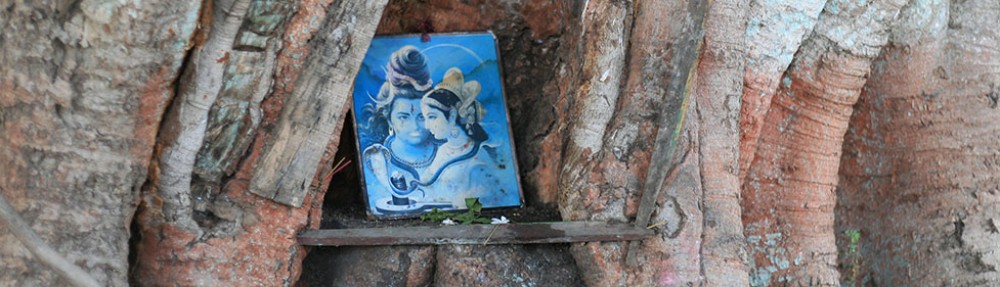

Ganesha, Lord of Obstacles and New Beginnings, Pune
Karma Yoga & Affirmations for the New Year
Karma is a theory of cause and effect — of the consequences of our actions. All actions (including “inaction”) have results, however complex and unforeseen. We are responsible for the actions. We may not foresee all the consequences, and we cannot control the outcomes since we are not prescient about all the effects. However, that must not keep us from “right effort” and “right action” (borrowing Buddhist terms).
In karma yoga one seeks to act without attachment to the consequences and without using actions to feed the ego.
All the affirmations below are linked in some way to being active in the world and, wherever possible, reducing suffering in and around us. They are from many traditions, but the voices seem much the same.
Chants, Mantras & Prayers for the New Year
A universal mantra
Universal Prayer for Peace from the Upanishads
Ganesha Mantras
Invocation (Om Vakratunda Mayakaya …)
Shri Ganesh Vandana Mantra (Om Suklam Baradharam Vishnum…)
Ganesha Gyatri (Om Ekadanta ya Vidamahe …)
“Look to This Day” (Kalidasa, 3rd/4th century sanscrit poet))
Affirmations/aphorisms by Rabbis Hillel and Tarfon
Two prayers from the Christian tradition
Reinhold Neibuhr, the “serenity prayer”
The Prayer of Saint Francis (“…make me an instrument of Thy peace..”
Two Metta/Loving Kindness Meditations from the Buddhist Tradition

Ancient Ganesha, Elephanta Island, Mumbai Harbor (Maharasthra)
A Universal Prayer/Mantra (yoga and Buddhist traditions)
Lokah, samastah
Sukhino bhavantu
English: May all beings, everywhere, be happy and free.
Universal Prayer for Peace from the Upanishads
Om, Sarve bhavantu sukhina
Sarve Santu niramaya
Sarve Bhadrani
Pasyantu
Ma Kashchit du kha Bhagbhavet
Om Shanti Shanti Shanti
English:
May all be prosperous and happy
May all be free from illness
May all see what is spiritually uplifting
May no one suffer
Om Peace, peace, peace
THREE GANESHA MANTRAS

Temple to Ganesha, Pune
Ganesha has many names and attributes. A mantra to him is often used when beginning a trip, a new venture, or opening a public event, or even a new life phase.
For the New Year, the attributes we might particularly appreciate are Ganesha as the Lord of Obstacles (he can place them in the path, or remove them), and as the Lord of New Beginnings. However, Ganesha has many other attributes.
Shakunthala Jagannathan Nandith Krishna [see Note on Ganesha below] lists 32 attributes including beloved child, god of devotees, valiant warrior, the powerful one, a god of achievement, protector of the weak, and giver of success (often pictured with the Goddess Lakshmi).
In Maharasthra there is a strong tradition of Ganesha worship, with the huge annual festival of Ganesh Chaturthi in the region of Pune. This region also has many ancient and recent Ganesha shrines.
One famous invocation to Ganesha invokes him to remove obstacles (forever):
Om Vakratunda Mahakaya
Suryakoti Samaprabha
Nirvighnam Kurume Deva
Sarva Kaaryeshu Sarvada
Oh god with curved trunk, large body whose aura is like the light
of a crore [= 10 million] of suns. Please make my entire work obstacle free, forever.
There are often differences in the way the sanscrit is transliterated into English syllables. As an example, the above mantras is rendered by Shakunthala Jagannathan Nanditha Krishna (see Notes below on bibliography and pronunciation) this way:
Vakratunda mahaakaaya
Sooryakoti samaprabhaa
Nirvighnam kurumedeva
Sarvakaaryeshu sarvadaa
For a literal translation, this may help: {Thanks to several websites for this glossary.]
Vakra -one that is not straight
Vakratunda – curved trunk
Mahakaya – large body, most powerful
Suryakoti – Surya is sun, koti means crore (10 million)
Samprabha – prabha is aura, or grandeur, sama – like
[the two lines together, Suryakoti samprabha, means the lord whose aura is like light of crores of sun put together)
Nirvignam – free of obstacles
Kurume – give me
Deva – god
Sarva – all
Karyeshu – work
Sarvada – always
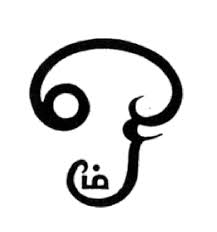
This Om from Tamil is, famously, also a symbol for Ganesha. In some traditions, Ganesha is a special object of worship and a focus for religious observance. Here Ganesha is identified with the sacred sound OM.
Shri Ganesh Vandana Mantra
Om Suklam Baradharam Vishnum
Shashi Varanam Chatur Bhujam
Prasanna Vadanam Dhyaye
Sarva Vighnopa Shantaye
Salutations to Ganesh who is omnipresent, who wears white robes
Whose face is as bright and cool as the moon and who has 4 arms
Who has a contented face (capable of blessing)
Meditating on him, all obstacles in my life are neutralized.
Suklam (white) Bara (dress)
Dharam (wearer)
Vishnum (all-pervasive)
Shashi (moonbeam, light of the moon)
Varanam (color)
Chatur (four)
Bhujam (arms)
Prasanna (smiling/contented)
Vadanam (face) Dhyaye (I meditate)
Sarva (all)
Vighnopa (obstacles)
Shantaye (neutralized, peaceful)
Ganesha Gyatri
This is one of the best-known mantras, the Ganesha Gayatri. It has a classic form of 24 syllables, eight each in three lines.
Om Ekadanta ya Vidhamahe,
Vakratunda ya Dhimahi,
Tanno Danti Prachodayat
English
We pray to the one with the single elephant tusk who is omnipresent. We meditate upon and pray for greater intellect to the Lord with the curved, elephant-shaped trunk. We bow before the one with the single elephant tusk to illuminate our minds with wisdom.
Translation of the Ganesha Gyatri Mantra
Ekadantaya – Single (eka = tusk/tooth (danta) [See NOTE, on linguistic trivia]
Vidhamahe – who is omnipresent
Vakratundaya – Curved trunk
Dhimahi – We meditate upon and pray for greater intellect
Tanno Danti – We bow before the one with the single tusked elephant tooth
Prachodayat – Illuminate our minds with wisdom
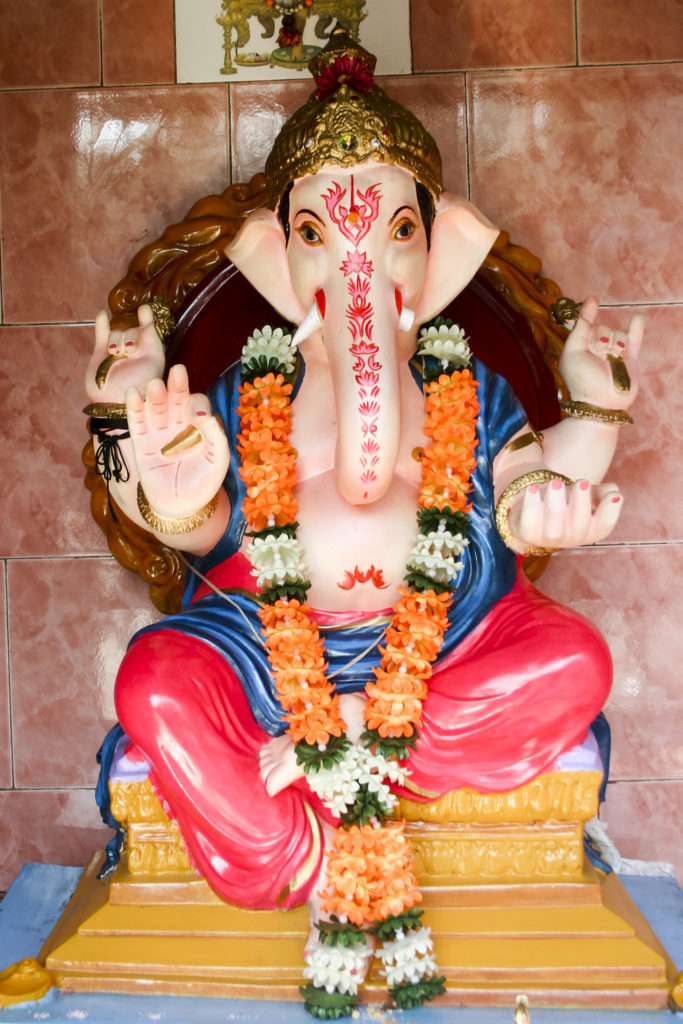
Shrine to Ganesha, Pune, India
[
This poem by Kalidasa, dating from roughly the 4th century, is well-known in Twelve-Step groups where it stands as a reminder to take life one day at a time, free from rerets about the past and anxieties an unknown future — living here and now, in the world as it is given and not as we would have it be.
Look to This Day (Kalidasa)
Look to this day:
For it is life, the very life of life.
In its brief course
Lie all the verities and realities of your existence.
The bliss of growth,
The glory of action,
The splendor of achievement
Are but experiences of time.
For yesterday is but a dream
And tomorrow is only a vision;
And today well-lived, makes
Yesterday a dream of happiness
And every tomorrow a vision of hope.
Look well therefore to this day;
Such is the salutation to the ever-new dawn!
Kalidasa (3rd/4th Century sanscrit poet)
Rabbis Hillel and Tarfon are almost universally known for these aphorisms, though not all know their names of even the time of their lives (roughly just before or after the Common Era).
They are a wonderful statement of karma yoga — the yoga of skillful action in the world. They focus on what is to be done now, without obsessing about the results or being daunted by the difficulty of the task. (Famously, even Ronald Reagan cited Rabbi Hillel, without mentioning him by name, during a policy speech.)
I often think of these two aphorisms together with “Lokah samastha sukhino bhavantu,” “May all beings everywhere be happy and free.” If I believe that, then I must try to live that even though humility and reality tell me that my efforts are only a small part of the change in the world. Hillel tells us to act now for ourselves and others, and Tarfon reminds us that we may not finish the task, but that it remains ours. As the Fifth Remembrance also reminds us, my actions are my only true possessions.
Rabbi Hillel (…if not now, when?)
“If I am not for myself, then who will be for me? And if I am only for myself, then what am I? And if not now, when?”
and…
“Take care of yourself — you never know when the world will need you.”
Rabbi Hillel, ca 30 BCE-10 CE
Rabbi Tarfon (‘”….neither are you free to abandon it.”)
Do not be daunted by the enormity of the world’s grief. Do justly, now. Love mercy, now. Walk humbly, now. You are not obligated to complete the work, but neither are you free to abandon it.
Rabbi Tarfon (1st/2nd Century, CE)
PRAYERS FROM THE CHRISTIAN TRADITION
Reinhold Neibuhr’s famous prayer, in the short form used by Twelve-Step groups
God grant me the serenity to accept the things I cannot change,
Courage to change the things I can,
and the Wisdom to know the difference.
There are other, longer versions that probably represent the prayer in its original form. In both short and long forms the prayer is also compatible with the (karma) yoga of action which focuses on what is to be done now, in this present day (see Kalidasa), within my powers.
God, give me grace to accept with serenity
the things that cannot be changed,
Courage to change the things
which should be changed,
and the Wisdom to distinguish
the one from the other.
Living one day at a time,
Enjoying one moment at a time,
Accepting hardship as a pathway to peace,
Taking, as Jesus did,
This sinful world as it is,
Not as I would have it,
Trusting that You will make all things right,
If I surrender to Your will,
So that I may be reasonably happy in this life,
And supremely happy with You forever in the next.
Amen.
This last prayer from the Christian tradition describes an aspiration to the way one would hope to be in the world, acting now. Except for the reference to a supreme being, it resonates with the Buddhist commitment to reduce suffering in myself and in others.
The Prayer of Saint Francis (… make me an instrument of thy peace…”
Lord make me an instrument of Thy peace.
Where there hatred, let me sow love.
Where there is injury, pardon.
Where there is doubt, faith.
Where there is despair, hope.
Where there is darkness, light.
Where there is sadness, joy.
Lord, grant that I may not so much seek to be consoled as to console, to be understood as to understand; to be loved as to love; for it is in giving that we receive, and it is in pardoning that we are pardoned, and it is in dying that we are born to eternal life.
Two Metta Loving-Kindness Meditations from the Buddhist Tradition
Metta is the Pali word that is maitri in Sanscrit and usually translated as “loving kindness.” Here are two examples that seem complementary with the aspiration in the Prayer of Saint Francis,
Metta
May my mind b filled with thoughts of loving kindness, compassion and joy. May I be generous. May I be gentle. May I be at ease in body and mind. May I be healthy and may I use my strength to offer the loving Presence of this path I walk.
May my heart become soft. May my words by pleasing to others. May my actions be kind. May all my experinces help me to cultivate thoughts of generosity and gentleness. May they inspire friendly behavior. May they help me be free from fear, tension, anxiety, worry and restlessness.
May it be so for all beings
Loving Kindness Meditation
This is what should be accomplished by the one who is wise,
Who seeks the good, and has obtained peace.
Let one be strenuous, upright, and sincere,
without pride, easily contented, and joyous.
Let one not be submerged by the things of the world.
Let one not take upon oneself the burden of riches.
Let one’s senses be controlled.
Let one be wise but not puffed up and
Let one not desire great possessions even for one’s family.
Let one do nothing that is mean or that the wise would reprove.
May all beings be happy.
May they be joyous and live in safety.
All living beings, whether weak or strong,
In high or middle or low realms of existence,
Small or great, visible or invisible,
Near of far, born or to be born,
May all beings be happy.
Let no one deceive another nor despise any being in any state.
Let non by anger or hatred wish harm to another.
Even as a mother at the risk of her life
Watches over and protects her only child,
So with a boundless mind should one cherish all living beings.
Suffusing love over the entire world,
Above, below, and all around, without limit,
So let one cultivate an infinite good will toward the whole world.
Standing or walking, sitting or lying down,
During all one’s waking hours,
Let one practice the way with gratitude.
Not holding to fixed views,
Endowed with insight,
Freed from sense appetites,
One who achieves the way
Will be freed from the duality of birth and death.
NOTE: Ganesha
The iconic figure of Ganesha is a short, round figure that might that of a young person, topped by the head of an elephant. Often, the head had only one tusk.
One popular legend (in many versions) is that Ganesha was the son of the Shiva, the Lord of Yoga (and destruction). Shiva returned from a long period in the forest and his way to his wife, Parvati, was blocked by Ganesha who did not recognize his father and was trying to protect his mother. Shiva also did not recognize his son and in anger struck off his head. Later, in remorse, Shiva attempted to find another head for the boy and found one of a small elephant.
The single tusk (eka = one; danta = tusk or tooth) was, in one legend, lost in a battle with a demon. A famous drawing shows Ganesha using the tusk as a pen to transcribe the Bhagavad Gita from the dictation of sage Vyasa.
These legends are only two of many, and although they are widely known, they are only a superficial view of the importance of Ganesha. He is often a powerful warrior (Vakratunda), a consort of goddesses, a warrior against demons, and much more. For a much more richer and balanced view, see Shakunthala Jagannathan Nandith Krishna, GANESHA: The Auspicious…The Beginning. Bombay: Vakila, Fether & Simons, Ltd, 1992. I have the two legends the origin of Ganesha’s head, and the single tusk, from his book. The book explains many other legends, beliefs and spiritual observances.
NOTE: Linguistic Trivia
Etymologically, danta, or tooth, seems to be the linguistic ancestor of “dentes,” dental, and other modern words referring to teeth. Similarly pada is related to “ped,” “podiatrist,” “pied a terre,” and other modern words related somehow to “feet.” For comparison, there are other examples such as the word “sutra” which is related to “suture” or thread. Thus, the sutras are like “pearls strung on a thread” of dharma. Lilkewise, supta is ancestrally relted to “supine” and we find that the “supta” asanas are generally done on the back, or in a supine position.
NOTE: Differences in Pronunciation and Transliteration
Depending on the sources consulted, there are often differences in translation and melodic accompaniment to the chants/mantras. These are not necessarily important, but some forms are a bit easier to wrap the English-speaking tongue around. Fortunately, the internet contains many example of chanted/sung mantras; however, these too show many variations in intonation and musicality. Technically, though, the syllables are sacred and proper pronunciation is important for the physical and spiritual effect of the mantra.